Why American Homes Got Wall-to-Wall Carpet: A Wartime Shortage and a Very Aggressive Marketing Campaign

Photo: Unknown authorUnknown author, Public domain, via Wikimedia Commons
If you grew up in an American suburb built between 1950 and 1985, there's a reasonable chance your childhood home had wall-to-wall carpet. Maybe avocado green. Maybe harvest gold. Maybe a shade of brown that no longer has a name. It was everywhere — bedrooms, living rooms, hallways, sometimes bathrooms — and it felt completely normal, the way hardwood floors feel normal now.
But wall-to-wall carpet wasn't always normal. For most of American history, it was barely a thing. And the reason it suddenly appeared in millions of homes after World War II has almost nothing to do with design trends or consumer preference. It has everything to do with a wartime timber shortage and an industry that spotted an opportunity and never let go.
 Photo: World War II, via assets.editorial.aetnd.com
What American Floors Actually Looked Like
For most of the 19th and early 20th centuries, the aspirational American floor was hardwood — polished, stained, and maintained with genuine effort. Rugs existed, but they were area rugs: discrete, movable, and usually expensive. Wall-to-wall carpeting — textile installed edge to edge across an entire room — was technically possible but practically rare outside of hotels and upscale commercial spaces. The machinery to produce it at scale existed, but there wasn't much consumer demand, and the cost of quality carpet made it a luxury most households couldn't justify.
Middle-class American homes typically had wood subfloors covered with hardwood planks. The subfloor didn't need to look good because nobody was going to see it. The hardwood on top was the point.
Then the war came, and the wood went somewhere else.
The Lumber Problem Nobody Talks About
World War II consumed American materials at a staggering rate. Steel, rubber, aluminum, and copper get most of the historical attention, but timber was just as critical. Military construction — barracks, airstrips, shipyards, temporary structures of every kind — absorbed enormous quantities of lumber. At the same time, the federal government was pushing to house hundreds of thousands of defense workers near factories and shipyards as quickly and cheaply as possible.
Speed and cost won. The housing units built during the war years were functional and fast, which meant the floors were often rough plywood subfloor or low-grade planking that would have been embarrassing in a prewar home. There was no budget and no time for the finishing work that turned a raw floor into something presentable.
Builders needed a cover-up. Textile mills, whose output had also been redirected toward military production — parachutes, uniforms, webbing — were looking for peacetime markets. The match was obvious, even if it was born out of compromise rather than ambition.
Rolls of tufted textile could cover an unfinished floor quickly, cheaply, and without the skilled labor that hardwood installation required. It wasn't glamorous. It was a workaround.
The Dalton, Georgia Angle
The story of how carpet became an industry rather than a patch job runs through one unlikely place: Dalton, Georgia. The region had a long tradition of hand-tufted bedspreads — a cottage craft that dated back to the early 1900s, when local women sold tufted goods along the highway to passing tourists. The technique involved punching yarn through a fabric backing to create a raised pile surface.
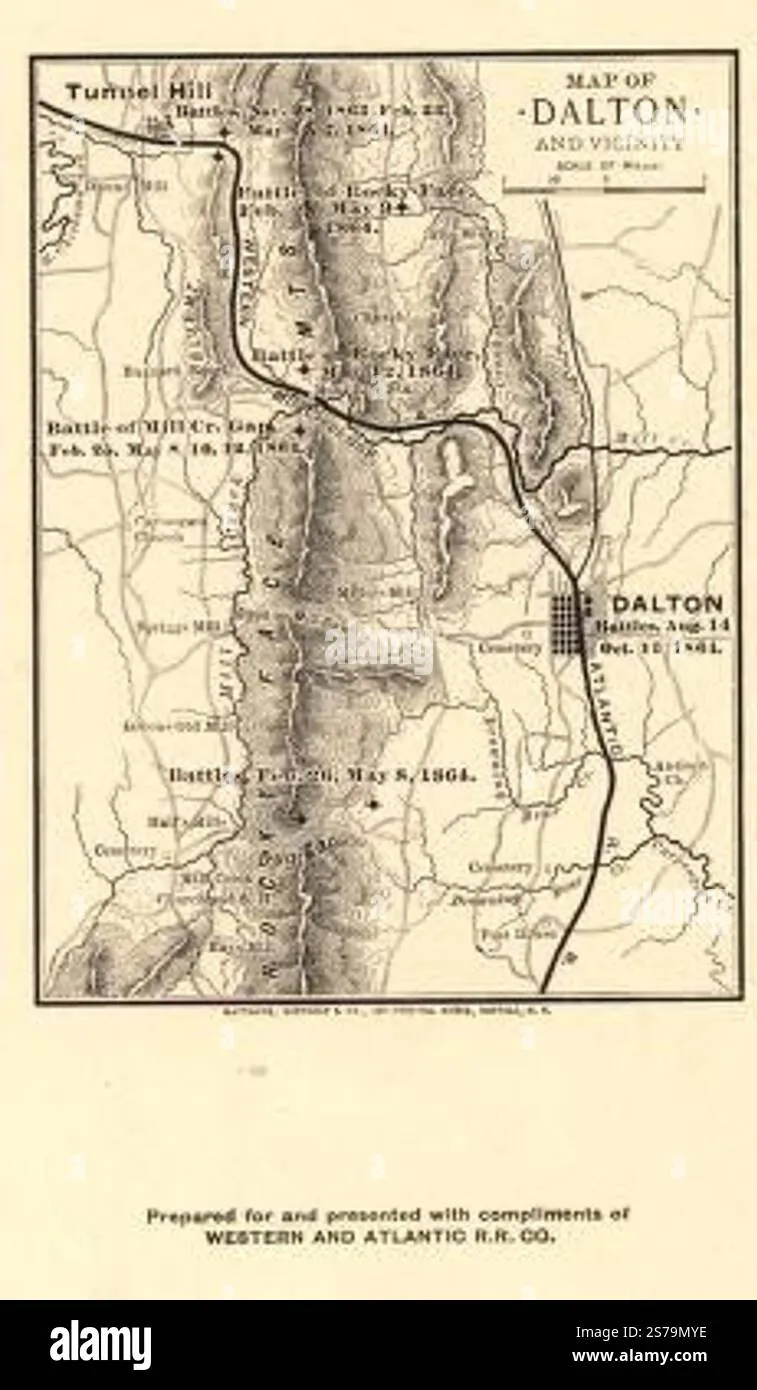 Photo: Dalton, Georgia, via c8.alamy.com
In the late 1930s and 1940s, entrepreneurs in Dalton began mechanizing the tufting process. Early tufting machines were adapted from sewing equipment and were crude by modern standards, but they were fast — dramatically faster than woven carpet production, which required expensive looms and skilled operators. Tufted carpet could be produced at a fraction of the cost of traditional woven carpet.
By the late 1940s, Dalton mills were producing tufted carpet at industrial scale. The timing was almost perfect. The postwar housing boom was just getting started, and millions of Americans were moving into newly built suburban homes — homes that, like their wartime predecessors, often had floors that needed covering.
Selling Compromise as Luxury
Here is where the story gets interesting, because what happened next wasn't inevitable. Cheap tufted carpet covering rough subfloors could have remained what it was: a budget solution for budget housing. Instead, the textile industry did something remarkable. It rebranded.
Through the late 1940s and 1950s, carpet manufacturers and their advertising agencies launched campaigns that repositioned wall-to-wall carpet not as a workaround but as a lifestyle upgrade. Carpet was warm. Carpet was quiet. Carpet was soft underfoot. Carpet said that you had arrived. The imagery in advertisements showed prosperous families in beautifully appointed rooms, children playing safely on cushioned floors, housewives running their hands appreciatively across deep pile.
The pitch worked partly because it was timed perfectly to postwar American optimism. Returning veterans wanted homes that felt comfortable and modern. New materials — synthetic fibers like nylon and later polyester — made carpet more durable and easier to clean than earlier wool versions. Colors expanded. Styles multiplied. What had been a wartime compromise became, by the 1960s, the default choice for millions of American homeowners.
Hardwood floors, the previous aspirational standard, started to seem cold, old-fashioned, and drafty by comparison.
The Quiet Comeback
For decades, wall-to-wall carpet dominated American interiors. Then, starting in the 1990s, the pendulum swung back. Hardwood floors came back into fashion — partly for aesthetic reasons, partly because homebuyers started pulling up carpet and discovering that original hardwood had been underneath all along. Carpet developed a reputation for trapping allergens and looking worn. Real estate listings began advertising no carpet as a selling point.
But carpet never actually went away, and in recent years it's been staging a measured return — particularly in bedrooms, basements, and family rooms where warmth and softness still matter more than aesthetics. New stain-resistant fibers and improved manufacturing have addressed some of the old complaints.
The material that started as a fix for unfinished wartime floors turned out to have genuine staying power — which is perhaps the most fitting ending for something that was never supposed to be the main attraction in the first place.