The Ice Man Who Froze the World: How One Obsessive Bostonian Wired Americans to Need Cold Drinks

Order a drink almost anywhere outside the United States and you'll get a glass. Order the same drink in an American restaurant and you'll get a glass packed so full of ice cubes that the actual liquid is almost beside the point. It's a habit so ingrained in American food culture that most people don't even notice it — until someone from another country points it out with a look of genuine bewilderment.
The story of why Americans do this starts on a frozen Massachusetts pond in the winter of 1806, with a twenty-two-year-old Boston merchant who had an idea so strange that his own family thought he'd lost his mind.
The Idea That Was Supposed to Be Ridiculous
Frederic Tudor came from a wealthy Boston family, and by his early twenties he had developed a fixation that his peers found baffling: he believed he could cut ice from New England's frozen ponds in winter, ship it to the Caribbean and the American South, and sell it at a profit.
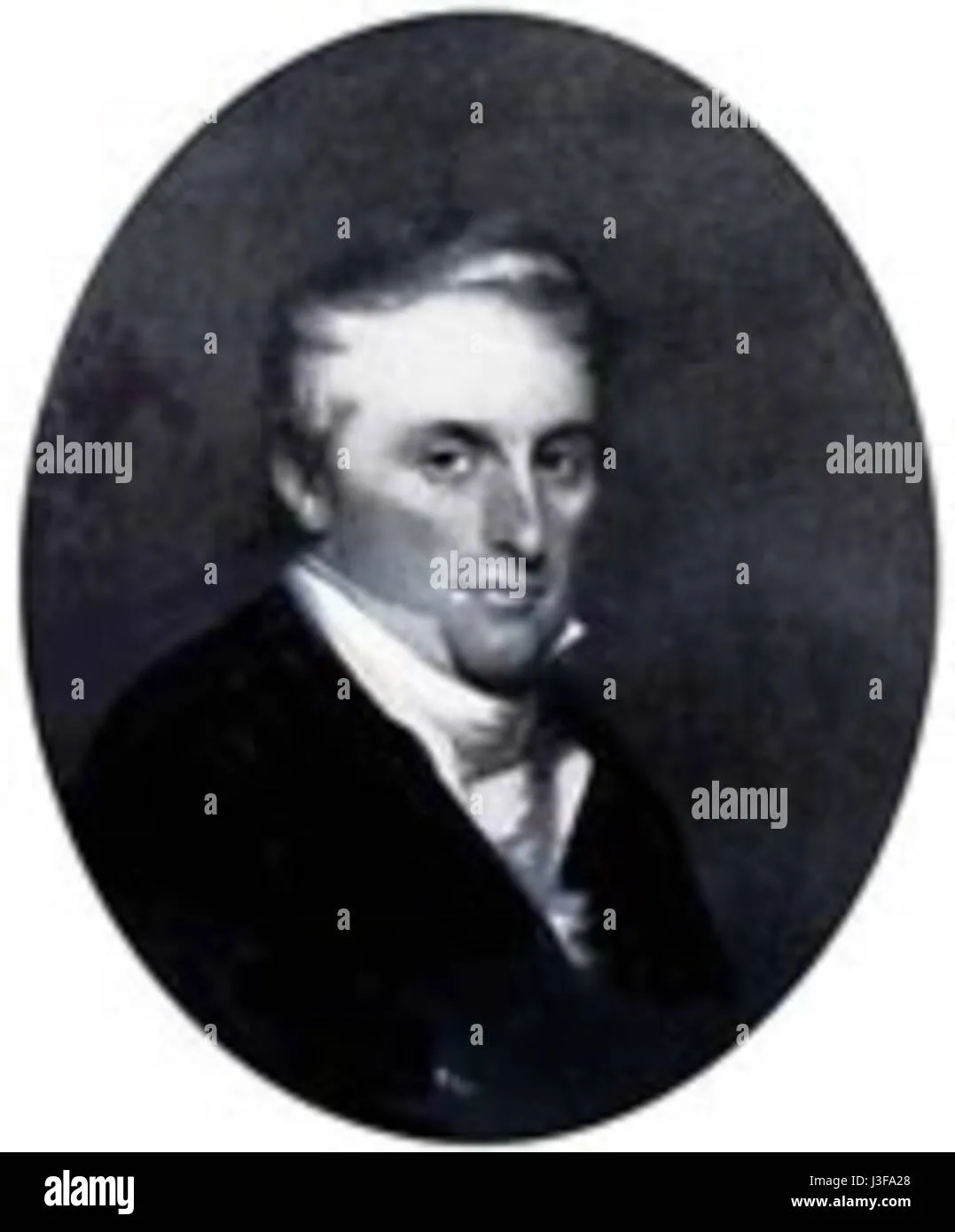 Photo: Frederic Tudor, via c8.alamy.com
The problems with this plan were so obvious that people laughed. Ice melts. The tropics are hot. Ships in the early 1800s were wooden sailing vessels, not refrigerated containers. By the time you got a block of ice to Havana or Martinique, conventional wisdom said you'd have a puddle and a ruined cargo hold.
Tudor ignored all of that. In 1806, he loaded his first shipment — 130 tons of ice cut from a pond in Saugus, Massachusetts — onto a brig called the Favorite and sailed for Martinique. He arrived to find that nobody on the island had thought to build an icehouse to store the cargo. He sold what he could before it melted and lost nearly everything.
A reasonable person would have stopped there. Tudor was not a reasonable person.
The Long, Expensive Education
Over the next two decades, Tudor kept at it with a persistence that bordered on mania. He went bankrupt multiple times. He spent time in debtor's prison. His journals from the period oscillate between grandiose confidence and near-despair, sometimes within the same entry.
But he was learning things that nobody else knew, because nobody else had tried this long enough to figure them out.
The most important discovery was insulation. Tudor experimented obsessively with how to slow melting — first with sawdust, then with wood shavings, then with combinations of both. He found that a well-insulated icehouse could preserve ice through a tropical summer with surprisingly low loss rates. He also discovered that ice cut in thick, uniform blocks survived shipping far better than irregular chunks.
He brought in a Massachusetts farmer and engineer named Nathaniel Wyeth, who redesigned the ice-cutting process entirely. Wyeth developed a horse-drawn ice plow that scored frozen ponds into a grid of perfectly uniform blocks, which workers could then saw out cleanly and stack without wasted space. The industrialization of ice harvesting had begun.
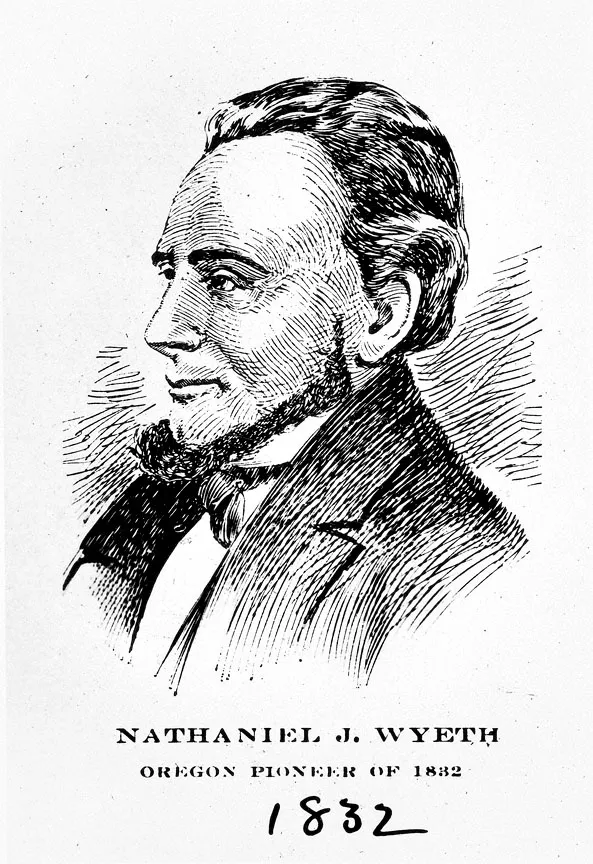 Photo: Nathaniel Wyeth, via www.oregonhistoryproject.org
By the late 1820s, Tudor had figured out the full supply chain: efficient harvesting in winter, insulated storage in icehouses at both ends of the journey, and fast unloading at destination ports. The operation started generating real money.
Building the Infrastructure of Cold
What Tudor was doing, without fully realizing it, was building the physical and psychological infrastructure for refrigeration in America — decades before mechanical refrigeration existed.
His ice trade created a network of icehouses along the Eastern Seaboard and eventually deep into the American interior. Butchers began storing meat longer. Brewers discovered they could produce lager beer year-round if they had reliable cold storage. Hospitals found uses for ice in patient care. Hotels started offering iced drinks as a luxury feature, then as a standard one.
In American cities, the iceman became a neighborhood fixture — a regular delivery route, like milk, that households planned around. Families bought iceboxes: insulated wooden cabinets with a compartment for a block of ice and storage space below for food. The icebox was the direct ancestor of the refrigerator, and it existed because Tudor's trade had made ice a reliable, affordable commodity rather than a seasonal novelty.
By the 1840s and 1850s, American consumers in cities had developed a baseline expectation that food would be kept cold and drinks would be served chilled. That expectation didn't exist before Tudor built the system that could fulfill it.
How the Expectation Outlasted the Ice
When mechanical refrigeration arrived in the late 19th century — first in commercial settings, then slowly in American homes through the 1920s and 1930s — it didn't replace the cultural habit Tudor had built. It amplified it.
Americans who had grown up with iceboxes and ice delivery simply transferred their expectations to the new electric refrigerator. Cold drinks weren't a luxury anymore; they were the default. Ice trays became a standard refrigerator feature. Automatic ice makers arrived in the mid-20th century. Today, American refrigerators routinely include built-in ice dispensers as a baseline feature that would strike most of the world as excessive.
The ice-in-everything habit is so culturally specific that it functions almost as a national identifier. American travelers abroad learn quickly that asking for ice is an adventure. Foreign visitors to the U.S. often comment on the sheer volume of ice in a standard drink with the same confusion Frederic Tudor's early Caribbean customers showed — except those customers were confused that ice existed at all.
The Eccentric Who Rewired a Country
Tudor died in 1864, wealthy and largely vindicated, having built a global ice trade that touched markets from Boston to Calcutta. His story is often told as a triumph of entrepreneurial stubbornness, and it is that. But it's also something more specific: it's the story of how one person's obsessive insistence on a single idea built the physical infrastructure that trained an entire country to expect something it had never needed before.
You didn't develop a preference for ice-cold drinks through personal choice. You inherited it — from an icebox your grandparents' generation owned, from a delivery route that ran through American neighborhoods for a hundred years, from a supply chain that a bankrupt Boston merchant refused to abandon in the early 1800s.
Next time someone from another country stares at your ice-filled glass, you have an answer. It started with a man who went to debtor's prison for it.