From Battlefield to Backpack: How War Surplus Accidentally Equipped American Students
The Surplus Mountain
In 1945, the United States military faced an unusual problem: what to do with millions of pieces of equipment designed for a war that had suddenly ended. Warehouses across the country overflowed with everything from mess kits to sleeping bags to the sturdy aluminum frame packs that had carried soldiers' gear across European battlefields and Pacific islands.
These military rucksacks were marvels of engineering – lightweight aluminum frames that distributed weight evenly across a soldier's back, with canvas bags capable of carrying 60 pounds of equipment for days at a time. But with peacetime arrived, the military had no use for the massive stockpile of frame packs gathering dust in surplus depots.
The Outdoor Revolution
Enterprising outdoor gear companies quickly recognized the potential in military surplus. In the early 1950s, companies like Kelty and JanSport began purchasing surplus frame packs and selling them to the emerging market of recreational hikers and campers.
Dick Kelty, a California outdoor enthusiast, saw that military frame packs could be adapted for civilian adventure. He began modifying surplus frames, adjusting the fit and adding civilian-friendly features. His redesigned packs became popular with the growing community of Americans who were discovering backpacking as a recreational activity.
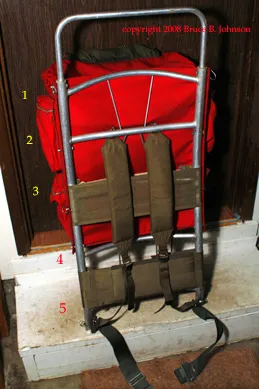 Photo: Dick Kelty, via www.oregonphotos.com
But the real transformation happened when Kelty's business partner, Skip Yowell, noticed something unexpected: teenagers were buying the modified military packs not for camping, but for carrying books to school.
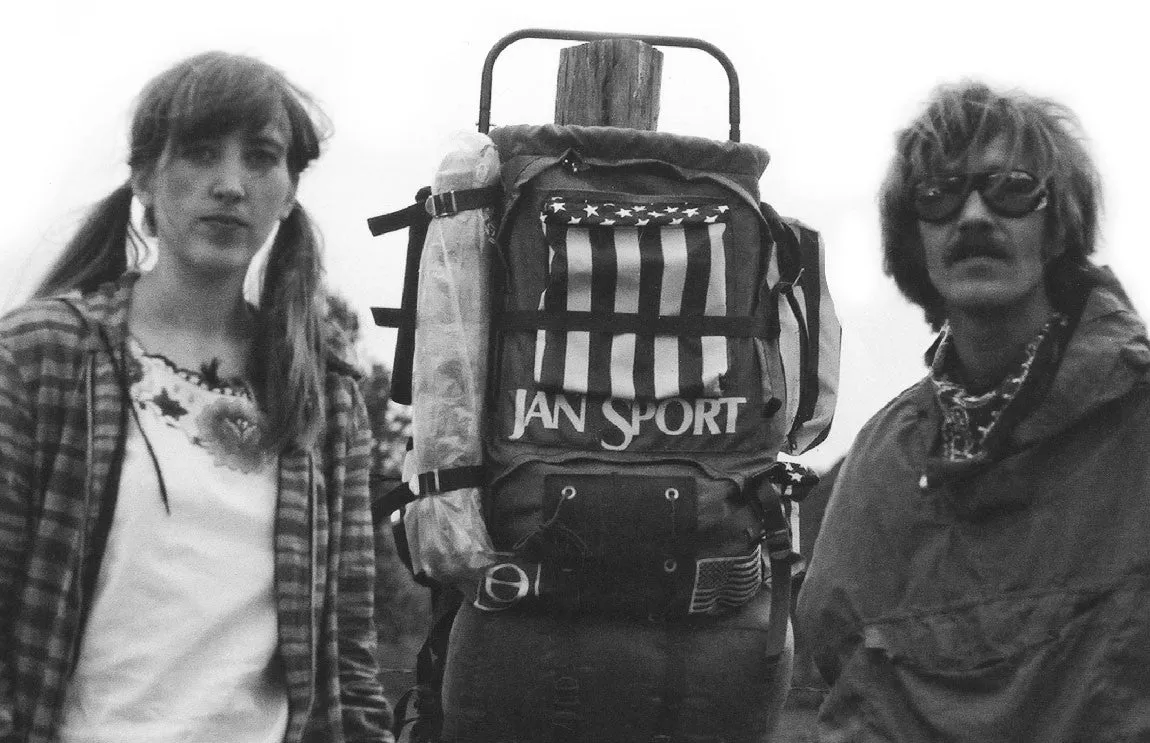 Photo: Skip Yowell, via cdn.shopify.com
The Accidental Student Market
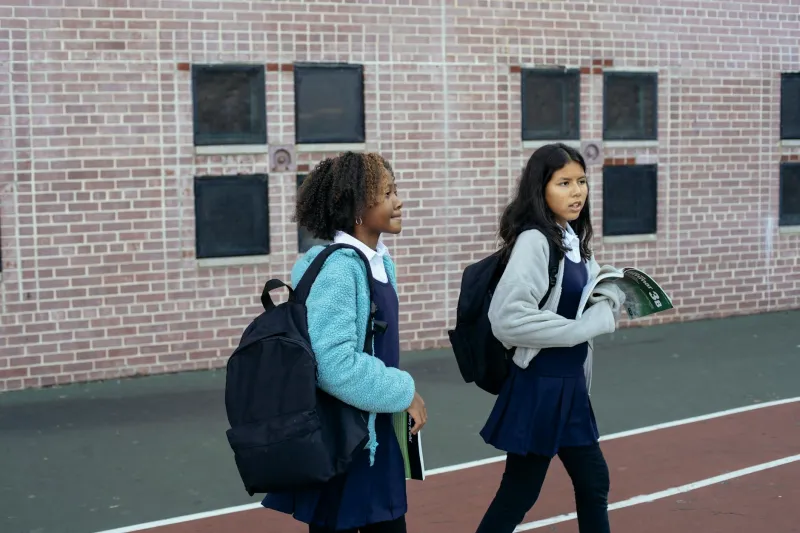
In the early 1960s, American high school students were still carrying their books in briefcases, messenger bags, or simply armloads of loose materials. The idea of wearing a pack on one's back was associated with military service or outdoor adventures – not everyday student life.
But a few California teenagers, inspired by their older brothers who had used military surplus gear for camping trips, began wearing modified frame packs to school. The practical advantages were immediately obvious: both hands remained free, the weight distributed evenly across their backs, and the packs could carry far more books and supplies than traditional bags.
Yowell realized he was witnessing the emergence of an entirely new market that no one had planned for.
The Great Simplification
In 1967, Yowell made a crucial decision that would reshape American student culture. Instead of continuing to modify complex military frame packs, he stripped away everything except the essential elements: the basic bag design and the concept of carrying weight on one's back.
He eliminated the aluminum frame, the complex adjustment systems, and the military-grade hardware. What remained was a simple fabric bag with two shoulder straps – the first true "school backpack." JanSport began producing these simplified packs specifically for students, marketing them as a practical solution for carrying books and school supplies.
The timing was perfect. American schools were growing larger, students were taking more classes, and textbooks were becoming heavier. The traditional briefcase or messenger bag simply couldn't handle the load that modern education demanded.
The Campus Invasion
College students adopted backpacks even faster than high schoolers. University campuses, with their long walks between buildings and heavy course loads, provided ideal conditions for backpack adoption. By the early 1970s, backpacks had become the standard method for students to transport their academic materials.
The cultural shift was remarkable. Within a single generation, American students went from carrying books in their arms to wearing specialized gear derived from military equipment. The backpack became a symbol of student identity – practical, casual, and distinctly American.
The Design Evolution
As demand exploded, manufacturers began refining the basic design. They added multiple compartments for organization, padded straps for comfort, and specialized pockets for calculators, pens, and other school supplies. The simple military-inspired design evolved into something specifically engineered for student life.
By the 1980s, backpacks had become sophisticated pieces of equipment. Companies like Eastpak (originally Eastern Canvas Products, another military supplier) began producing backpacks with lifetime warranties, recognizing that students would use these products daily for years.
The Childhood Standard
The most significant transformation came when elementary schools embraced backpacks. What had started as gear for high school and college students gradually moved down to younger ages. By the 1990s, kindergarteners were wearing tiny backpacks designed specifically for small children.
This shift fundamentally changed American childhood. The backpack became the first piece of personal equipment that children learned to manage independently. Loading and organizing a backpack became a basic life skill, taught alongside tying shoes and telling time.
The Unintended Consequences
The military origins of school backpacks created unexpected problems. Designs optimized for carrying heavy loads encouraged students to transport more materials than necessary. By the 2000s, pediatricians were warning about the health effects of children carrying backpacks weighing 20-30% of their body weight.
Schools began implementing "backpack policies" and investing in additional sets of textbooks to reduce the load students carried home. The very efficiency that made backpacks appealing had created new challenges that educators and parents are still addressing today.
The Accidental Institution
Today, the school backpack is so fundamental to American student life that it's impossible to imagine education without it. Every August, millions of families participate in the "back-to-school" backpack shopping ritual that has become a cornerstone of retail culture.
What began as military surplus equipment, accidentally discovered by California teenagers and simplified by a forward-thinking manufacturer, became the universal symbol of American student life. The journey from battlefield to classroom represents one of the most successful accidental product adaptations in consumer history – proof that sometimes the best innovations happen when practical solutions find unexpected new applications.