The Brooklyn Print Shop Problem That Made America Addicted to Cool Air
The Sticky Situation That Changed Everything
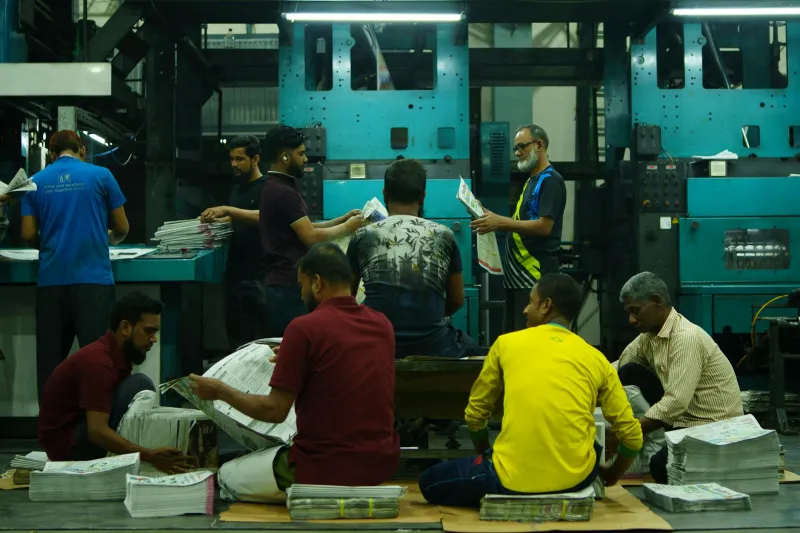
America's love affair with air conditioning didn't begin in a luxury hotel or a wealthy mansion. It started with a very practical problem: ink that wouldn't stick to paper in the summer heat of 1902 Brooklyn.
The Sackett-Wilhelms Lithographing and Publishing Company was losing thousands of dollars every summer. Their high-quality color prints—used for everything from advertisements to book illustrations—kept coming out blotchy and misaligned. The culprit? Brooklyn's oppressive humidity, which caused the paper to expand and contract unpredictably as ink was applied in multiple layers.
Enter the Accidental Inventor
Willis Carrier, a 25-year-old mechanical engineer fresh out of Cornell, was hired to solve what everyone assumed was a ventilation problem. But Carrier quickly realized that moving air around wasn't enough—he needed to control the moisture in the air itself.
 Photo: Willis Carrier, via i.ytimg.com
Working in the basement of the Buffalo Forge Company, Carrier designed what he called an "Apparatus for Treating Air." His machine didn't just cool the air; it removed humidity by passing air over coils filled with cold water, then reheated it to the desired temperature. The result was air with precisely controlled temperature and moisture levels.
The Sackett-Wilhelms printing problem vanished overnight. For the first time, they could produce consistent, high-quality prints year-round.
The Unlikely Evangelists of Cool
Carrier's invention might have remained an industrial curiosity if not for an unexpected group of early adopters: traveling entertainment venues. Vaudeville theaters, movie houses, and especially traveling circuses were desperate to attract summer crowds, but their canvas tents and poorly ventilated buildings became unbearable furnaces in hot weather.
The Rivoli Theater in New York City installed Carrier's system in 1922, advertising "20 Degrees Cooler Inside" on their marquee. Attendance during summer heat waves doubled virtually overnight. But it was the traveling circus industry that truly spread air conditioning across America.
 Photo: Rivoli Theater, via electrical.com
The Big Top Revolution
Circus owners like John Ringling saw Carrier's technology as a competitive advantage. By 1925, major traveling shows were installing portable cooling systems in their main tents. For millions of Americans in small towns across the country, their first experience with artificial cooling came under a circus big top.
Children who had never imagined escaping summer heat suddenly found themselves in magical spaces where the air itself felt different. Parents began asking local theater owners and shop proprietors why they couldn't provide the same comfort. The demand for "circus cool" began spreading from entertainment venues to retail spaces.
From Luxury to Necessity
The transformation wasn't immediate. Through the 1930s and 1940s, air conditioning remained a novelty—something you experienced at the movies or in an upscale department store. But World War II changed everything.
Military production facilities needed climate control to manufacture precision instruments and electronics. Suddenly, hundreds of thousands of American workers were spending eight hours a day in artificially cooled environments. When they returned home to stifling apartments and houses, the contrast became unbearable.
The Suburban Cooling Boom
The post-war housing boom coincided with mass production of smaller, more affordable cooling units. Levittown, the archetypal American suburb, began offering air conditioning as a standard feature in 1950. Real estate developers quickly learned that "central air" could justify higher prices and faster sales.
By 1960, air conditioning wasn't just about comfort—it was about status. Homes without cooling were seen as outdated, apartments without AC were harder to rent, and businesses that didn't offer climate control lost customers to competitors who did.
The Cultural Transformation
Air conditioning didn't just cool America—it rewired American culture. The technology enabled the population boom in previously uninhabitable places like Phoenix, Las Vegas, and Miami. Without artificial cooling, the Sun Belt migration that defined post-war America would have been impossible.
Indoor shopping malls, which became the social centers of suburban America, were only feasible because of climate control. The eight-hour office workday in glass skyscrapers required cooling systems. Even the modern American diet changed—we began eating heavier, more processed foods because we no longer needed to avoid heat-generating cooking during summer months.
America's Cooling Obsession
Today, the United States consumes more energy for air conditioning than the rest of the world combined. Americans cool their homes to temperatures that would require sweaters in winter, and office buildings often become so cold that workers need jackets in July.
This isn't just about comfort—it's about a cultural expectation that began with a Brooklyn printing problem and spread through circus tents across America. We've become so accustomed to controlling our environment that even brief exposure to natural summer temperatures feels intolerable.
The Unintended Consequences
Carrier's solution to a humidity problem created an entire industry worth hundreds of billions of dollars, reshaped where Americans live and work, and fundamentally altered our relationship with climate. But it also created new dependencies: energy grids strained by summer cooling demands, urban heat islands made worse by heat exhaust from millions of AC units, and a generation that's never learned to adapt to natural temperature variations.
The next time you walk from blazing summer heat into a perfectly climate-controlled space, remember: you're experiencing the legacy of a 1902 printing crisis that accidentally taught America to expect the impossible—complete control over the air itself.