How a Restaurant Bet Between Two Suits Invented the American Sports Weekend
Photo: Steve Shook from Moscow, Idaho, USA, CC BY 2.0, via Wikimedia Commons
Picture a Manhattan restaurant in the spring of 1961. Two men are having lunch. One of them, Roone Arledge, is a young, restless ABC producer with ambitions that far outpaced his network's budget. The other is Edgar Scherick, a television executive with a sports rights deal in his pocket and a problem he needed someone to solve. By the time the check arrived, American television had a new blueprint — and nobody quite realized it yet.
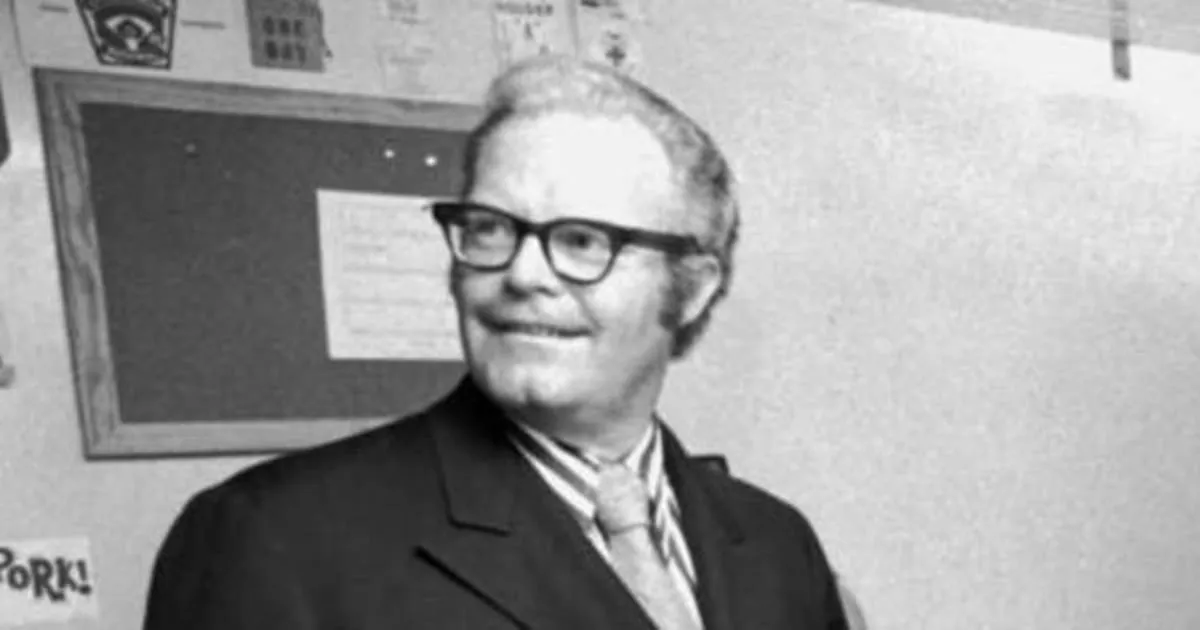 Photo: Roone Arledge, via res.cloudinary.com
The Network That Couldn't Compete
To understand why what happened next mattered, you have to understand where ABC stood in 1961. The network was a distant third behind CBS and NBC, perpetually short on money, short on prestige, and short on ideas that could actually close the gap. CBS had the news. NBC had the comedy. ABC had the scraps.
Sports programming existed on television, but it was narrow and relatively static. You watched the game that happened to be on. The camera sat in one place. There were no replays, no slow motion, no narrative build. It was essentially radio with pictures — a live event captured and transmitted, nothing more.
Roone Arledge had been thinking about something different. He'd written a memo to ABC's brass in 1960 that's now considered something of a founding document in American sports media. In it, he argued that television wasn't just capturing sports — it could be telling stories about sports. The athlete, the crowd, the drama, the setting. Sports as theater. Sports as a show.
The memo was well received internally. What Arledge needed was a vehicle.
The Deal That Started on a Napkin
Edgar Scherick had acquired the rights to broadcast AAU track and field events — not exactly marquee programming, but rights nonetheless. He needed a producer who could make the coverage interesting enough to sell advertising against. Someone pointed him toward Arledge.
The meeting that followed was less a formal pitch session and more a competitive conversation between two people who both thought they had the better idea. The wager — and accounts vary on exactly how formal it was — essentially came down to this: Arledge believed he could produce a sports anthology program that audiences would watch not because of which specific sport was on, but because of how it was presented. Scherick, intrigued but skeptical, gave him the chance to prove it.
The result was ABC's Wide World of Sports, which premiered on April 29, 1961, with coverage of the Penn Relays track meet in Philadelphia.
"The Thrill of Victory and the Agony of Defeat"
The show's opening sequence — narrated by Jim McKay over footage of athletic triumph and catastrophic failure — became one of the most recognized pieces of television in American history. The image of Vinko Bogataj, a Slovenian ski jumper, spectacularly wiping out at a 1970 competition, ran in that opening for years and became cultural shorthand for sports disaster. Most Americans who saw it had no idea who the man was or what competition he was competing in. That almost didn't matter. The emotion was the point.
That was Arledge's entire thesis made visible. You didn't need to know the sport. You needed to feel something while watching it.
Wide World of Sports covered everything: track and field, cliff diving, rodeo, figure skating, demolition derbies, table tennis championships, and lumberjack competitions. Some of it was obscure to the point of absurdity. But the presentation — the storytelling, the close-up cameras, the human-interest angles — made it watchable in a way that straight sports coverage hadn't been.
The Commercial Architecture That Followed
What Arledge built at ABC wasn't just a show. It was a proof of concept that changed the economics of sports broadcasting permanently.
Before Wide World of Sports, sports rights were relatively cheap because the audience was assumed to be limited — fans of whatever specific sport was being broadcast. Arledge demonstrated that sports could pull a general audience if the presentation was compelling enough. That insight made sports rights suddenly far more valuable than anyone had priced them.
The downstream effects were enormous. Monday Night Football — another Arledge production, launched in 1970 — took the same philosophy and applied it to the NFL. The result was a ratings juggernaut that transformed professional football into America's dominant sport. The broadcast contract model that now generates billions of dollars annually for the NFL, NBA, MLB, and college athletics traces a direct line back to the commercial logic Arledge proved out with a track meet in Philadelphia.
The modern sports weekend — the one built around specific broadcast windows, pregame shows, color commentary, instant replay, and athlete profiles — is largely his architecture.
The Lunch That Keeps Paying Out
Roone Arledge went on to run ABC News and reshape that division as aggressively as he had sports, launching Nightline and 20/20 and fundamentally changing how American television covered the world. But the thing that started it all was a lunch meeting, a problem that needed solving, and a young producer who was convinced that how you told a story mattered as much as what the story was.
The next time you settle in for a Sunday of football, basketball, or whatever sport is currently consuming your weekend, you're living inside a media structure that traces back to one impulsive agreement over a Manhattan lunch. Two men arguing about whether sports television could be more than a camera pointed at a field.
It could. It was. And American weekends have never been the same.