The Scrap Paper Shortcut That Became the Default Thinking Tool of American Power
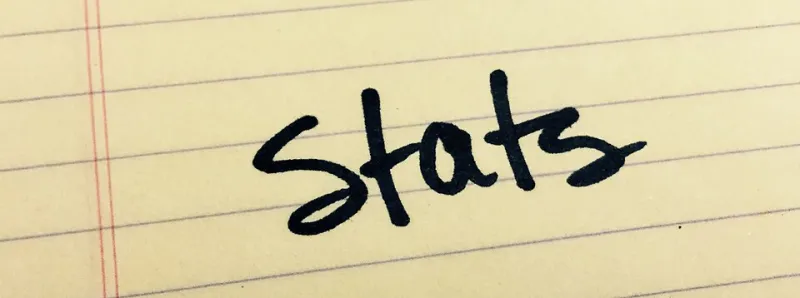
Photo: Cari Kelly, CC BY-SA 4.0, via Wikimedia Commons
If you've ever watched a courtroom drama, sat through a congressional hearing, or caught a glimpse of a CEO being interviewed at a conference table, you've probably noticed the same prop sitting nearby: a yellow legal pad, usually half-filled with handwriting, occasionally dotted with doodles in the margins. It looks authoritative. It looks deliberate. It looks like it was designed to signal serious thinking.
It wasn't. It was a way to avoid throwing away paper scraps.
The Waste Problem at the Mill
In the late 1880s, paper manufacturing was a messy, imprecise business. Sheets were cut to standard sizes, but the trimming process always left behind irregular edges and mismatched remnants — pieces that were too small or too oddly shaped to sell as finished product. For most mills, this was simply waste. You swept it up, you discarded it, and you moved on.
Thomas Holley, a worker at a paper mill in Holyoke, Massachusetts, looked at that waste pile and saw something different. The scraps weren't damaged. They weren't defective. They were just inconsistent — different sizes, different textures, sometimes from different paper stocks entirely. Holley's idea was straightforward almost to the point of being obvious: stitch the scraps together into usable pads, price them cheaply, and sell them to buyers who needed paper but didn't need perfection.
 Photo: Thomas Holley, via cdn.vox-cdn.com
The primary buyers he had in mind were lawyers. Legal work consumed enormous quantities of paper — notes, drafts, correspondence, case records. Attorneys weren't precious about the stock they wrote on during the working process. They needed something functional and affordable. Holley's assembled pads fit both requirements.
The Color That Nobody Chose
Here is where the story takes its most interesting turn. The yellow that defines the legal pad — that specific, slightly warm, pale canary shade that has become so strongly associated with American legal and professional culture — was not a design decision. It was a material accident.
When Holley assembled his pads from mill scraps, the pieces came from different paper batches. Some were white. Some were off-white. Some were faintly cream-colored. The inconsistency was a problem for presentation, so at some point in the pad's early commercial evolution, a yellow dye was applied to standardize the appearance across sheets. Yellow was cheap, available, and — crucially — it made the mismatched scraps look uniform.
There is also a practical argument that stuck around long after the scrap-assembly method was abandoned: yellow paper reduces eye strain compared to bright white, particularly under artificial light. Whether that was a known factor in the original decision or a rationalization that came later is difficult to pin down definitively. What's clear is that once the yellow color was established as the standard, it stayed. The legal pad's visual identity was locked in by a dye choice made to solve a manufacturing consistency problem.
How Lawyers Made It Legitimate
Holley's pads found their market quickly. By the early twentieth century, legal pads were a standard fixture in American law offices. The format — ruled lines, wide margins, letter-length sheets bound at the top — suited legal work specifically. The left-side margin (wider than standard notebook paper) gave attorneys space to flag key points, note citations, or mark sections for follow-up without cluttering the main text.
The American Bar Association reportedly began formally endorsing a standardized legal pad format in the early 1900s, which accelerated adoption across the profession and gave the product its enduring name. Once lawyers had claimed it, the pad's association with serious, professional work was essentially cemented.
From law offices, the pad migrated outward. Executives adopted it for meeting notes and strategic planning. Politicians and speechwriters used it for drafting. The legal pad became a shorthand for a certain kind of thinking — deliberate, working-draft, not-ready-for-the-printer thinking. The kind that happens before the polished version exists.
Presidents and the Pad
Multiple American presidents have been documented as habitual legal pad users. Lyndon Johnson was reportedly almost never without one. Richard Nixon drafted some of his most significant political decisions longhand on legal pads. More recently, the image of a president or senior official working through a problem on a yellow pad has become a visual cliché of American political life — so familiar that it reads as a symbol of gravity and deliberation.
 Photo: Lyndon Johnson, via facts.net
There's something almost paradoxical about that. The object that signals careful, weighty thinking was born as a solution to a factory waste problem. The color that reads as professional and serious was chosen because it made uneven scrap paper look consistent. The tool that American power has used to think through its most consequential decisions started as the cheapest possible version of a writing surface.
Still on the Desk
In an era of tablets, laptops, and voice-to-text software, the yellow legal pad has proved stubbornly persistent. Office supply stores still stock them in bulk. Law schools still treat them as standard equipment. A 2019 survey by a major office supply retailer found legal pads among the top-selling paper products in the United States, more than 130 years after Thomas Holley first assembled his mismatched scraps in a Massachusetts mill.
The reasons people give for still using them — the tactile quality of writing by hand, the freedom of an unstructured page, the way physical notes seem to stick in memory differently than typed ones — are all real. But the pad's staying power probably also has something to do with its accumulated cultural weight. Generations of Americans have watched serious people think on yellow pads. The association runs deep.
All of it traces back to a mill worker who didn't want to throw away the leftovers.