The Newspaper Crank Who Embarrassed America Into Agreeing What Time It Was

Every morning when your phone alarm goes off, or your microwave clock blinks at you, or you glance at the time in the corner of your laptop screen, you are participating in a system so universal it feels like a law of nature. Eastern time. Central time. Mountain time. Pacific time. Four zones, clean borders, no confusion.
It wasn't always this way. For most of American history, time was a local matter — a community decision made by whoever owned the most authoritative clock in town. And the man most responsible for ending that chaos wasn't a scientist, a railroad executive, or a senator. He was a newspaper editor from Pittsburgh who had strong opinions, a willingness to embarrass people in print, and, by most accounts, a serious relationship with whiskey.
300 Clocks, Zero Agreement
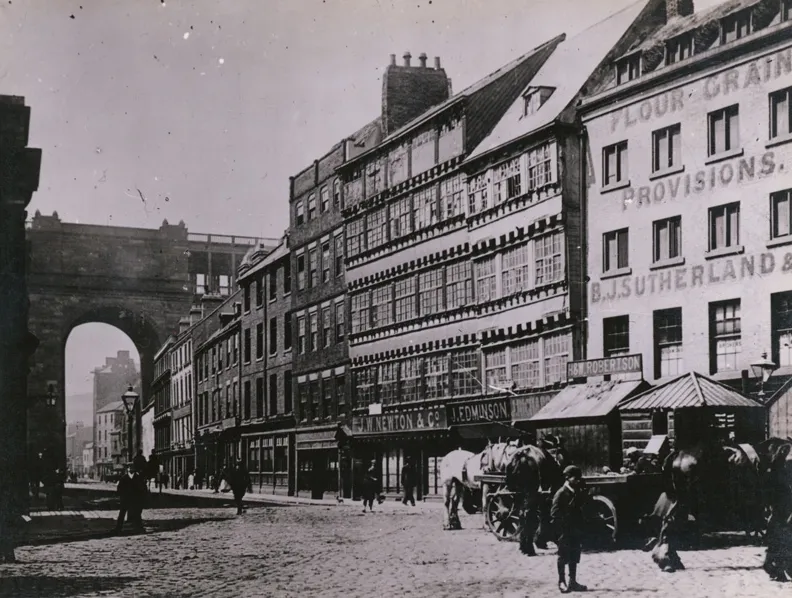
By the 1870s, the United States operated on an almost incomprehensible patchwork of local times. When it was noon in Washington, D.C., it was 12:08 in Philadelphia and 11:55 in Pittsburgh. Chicago ran on its own time. So did Cincinnati, Detroit, and every other city with enough civic pride to set its clocks by local solar noon rather than someone else's standard.
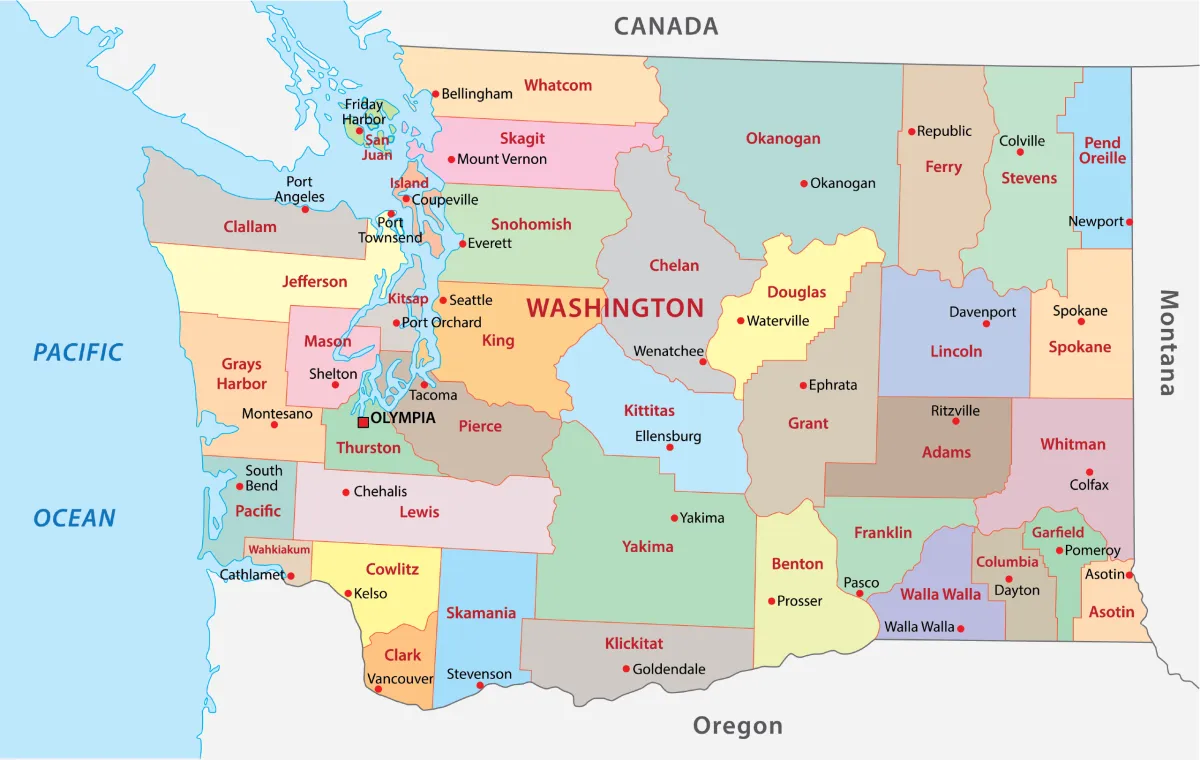 Photo: Washington, D.C., via www.mappr.co
On paper, this made a certain kind of sense. Local time — solar time — is what your body actually experiences. Noon should be when the sun is highest. Different longitudes mean different noons. A purely local approach to timekeeping is, in one reading, the most honest system possible.
In practice, it was creating catastrophes.
The railroad network that stitched the country together after the Civil War ran on published schedules. Those schedules meant nothing if every station along the line was keeping a different clock. A train arriving in Pittsburgh "on time" by Pittsburgh's reckoning might be eleven minutes late by Philadelphia's and three minutes early by Cleveland's. Dispatchers trying to coordinate train movements across multiple time zones — the actual, contradictory local zones, not the four tidy ones we use today — were essentially working with incompatible data. Collisions happened. Passengers missed connections. Cargo was lost. People died.
The railroads knew they had a problem. They had been trying to solve it internally for years, creating their own company-specific time standards that added yet another layer of confusion to the existing mess. A passenger in the 1870s arriving at a major terminal might encounter three or four different clocks on the wall, each set to a different railroad's standard time, none of them matching the town clock outside.
The Man With the Column and the Grudge
Charles Ferdinand Dowd was a Connecticut educator who had proposed a system of standardized time zones for North America as early as 1869. His plan was elegant and largely correct — divide the continent into zones set an hour apart, each anchored to a standard meridian. He spent years presenting it to railroad executives, writing pamphlets, and making the rounds of professional conferences.
The railroads listened politely and did nothing.
Enter Sandford Fleming, a Scottish-Canadian engineer who had developed a global standard time proposal and was pushing it through international channels with the methodical persistence of a man who believed that the correct answer, presented correctly, would eventually win. He was not wrong, but he was slow.
The figure who accelerated the whole enterprise into actual American practice was neither Dowd nor Fleming. It was a Pittsburgh newspaper editor named William Allen, who in the late 1870s and early 1880s used his platform at the Official Railway Guide — and his connections to the American press more broadly — to wage a sustained, pointed, occasionally savage campaign against the status quo.
 Photo: William Allen, via static01.nyt.com
Allen understood something that the engineers and educators had missed: the problem wasn't technical. Everyone already knew what a rational time zone system would look like. The problem was political and cultural. Nobody with the power to act wanted to be the first to move, because moving first meant admitting that the current system — the system your city, your railroad, your institution had been defending — was indefensible.
Allen's solution was to make the status quo more embarrassing than the alternative.
The Columns That Couldn't Be Ignored
Through the early 1880s, Allen wrote with increasing frequency and decreasing patience about the absurdity of American timekeeping. He catalogued near-misses and actual collisions that could be traced to scheduling confusion. He published the exact number of conflicting local times in active use — the figure most historians cite is somewhere between 300 and 400, depending on how you count. He named names. He quoted railroad officials who had privately acknowledged the problem while publicly defending the chaos.
He was not universally admired. Critics called him obsessive. Some editors who reprinted his columns added skeptical footnotes. The polite consensus in certain circles was that Allen was a crank — a man with a single idea who had mistaken persistence for insight.
But the columns kept running, and the problems kept accumulating, and the railroads kept quietly suffering through the consequences of a system everyone privately agreed was broken.
On November 18, 1883 — a date that railroad workers called "The Day of Two Noons" — the major American railroads simultaneously reset their clocks to a standardized four-zone system. It was not a government mandate. No law had passed. No president had signed anything. The railroads had simply, finally, agreed among themselves to do what Allen and Dowd and Fleming had been arguing for years.
In many American cities, clocks were set back or forward by as much as thirty minutes in a single afternoon. Church bells rang at the old noon and the new one. Newspapers ran front-page stories. Some citizens were furious, viewing the change as an imposition by corporate interests on natural law. A few towns refused to comply for years.
Congress didn't formally codify standard time into federal law until the Standard Time Act of 1918 — thirty-five years later.
The Invisible Architecture of Every Day
The four time zones that govern American life today are so deeply embedded in daily routine that questioning them feels almost philosophical. Alarm clocks, work schedules, television programming, stock market hours, flight departures — all of it runs on a system that didn't exist before 1883, and that came into existence not through scientific consensus or legislative action but through a grinding, unglamorous campaign of public embarrassment conducted largely by a man most Americans have never heard of.
Sandford Fleming gets the global credit. Charles Dowd gets the academic footnote. But the next time your alarm goes off at 7 a.m. and you groan and reach for your phone, spare a thought for the Pittsburgh newspaper editor who spent years making powerful people feel stupid about their clocks.
He was probably right about a lot of things. He was definitely right about that one.