The Ledger Nobody Asked For: How One Merchant's Gossip List Became the Number That Runs Your Financial Life

Photo: Tyne & Wear Archives & Museums, No restrictions, via Wikimedia Commons
The Ledger Nobody Asked For: How One Merchant's Gossip List Became the Number That Runs Your Financial Life
Somewhere in a database right now, there is a number attached to your name. You didn't choose it. You can't fully control it. And depending on what it says, it will determine whether a bank lends you money, whether a landlord rents you an apartment, and sometimes whether an employer considers you trustworthy enough to hire.
The American credit score is one of the most powerful invisible forces in modern life. It feels like something that must have been designed by economists or invented by banks. The actual origin is stranger and more human than that — and it starts with a traveling merchant who just wanted to know who was good for it.
The Problem With Trusting Strangers
In the early 1800s, American commerce ran almost entirely on credit. Farmers bought seed on credit before harvest. Shopkeepers stocked shelves on credit before selling their goods. Small manufacturers purchased raw materials on credit before they had revenue to show. This was normal and necessary — but it created an obvious problem. How did anyone know whether a new customer, a new business partner, or a new debtor was actually going to pay?
For centuries, the answer was simple: you asked around. Reputation was local, and local reputation was usually enough. If you'd been doing business in the same town for twenty years, people knew whether you were good for a loan. But as American cities grew and commerce expanded, that informal system started to crack. New York in the 1840s was filling up with merchants, traders, and businessmen who were strangers to each other — and strangers were a risk.
 Photo: New York, via www.metrc.com
Lewis Tappan's Uncomfortable Idea
Lewis Tappan was a New York silk merchant and — somewhat incongruously — a prominent abolitionist. He was also a pragmatist who understood that the credit problem wasn't going away on its own. In 1841, following a financial panic that had wiped out thousands of businesses and left creditors holding worthless debts, Tappan founded the Mercantile Agency.
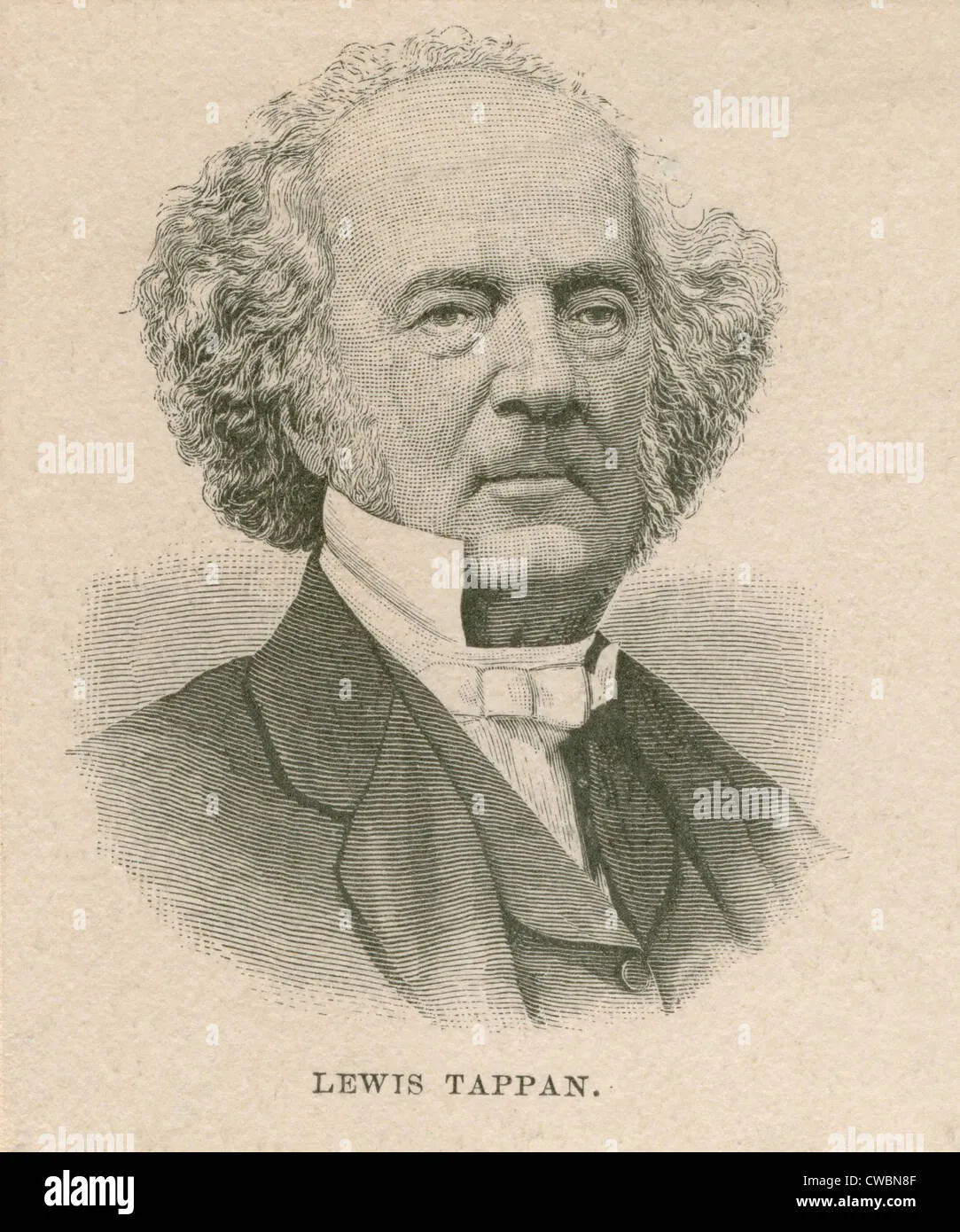 Photo: Lewis Tappan, via c8.alamy.com
The premise was simple and slightly audacious: he would collect information about the financial reliability of American businessmen and sell that information to merchants who needed to make lending decisions. He hired a network of correspondents — lawyers, local businessmen, and community figures — spread across the country to report back on who paid their debts, who was struggling, and who was a flat-out risk.
Those reports were handwritten, intensely personal, and often blunt to the point of cruelty. A merchant might be described as industrious but overextended, or honest but poorly managed, or simply not to be trusted. The assessments mixed financial data with moral judgment in a way that would make any modern compliance officer flinch.
But it worked. Businesses subscribed. The network grew.
From Gossip to Infrastructure
Tappan's Mercantile Agency eventually became Dun & Bradstreet, one of the oldest business credit reporting agencies still operating today. But the shift toward consumer credit — tracking individual Americans rather than businesses — came later and more gradually.
By the late 1800s and early 1900s, department stores and retailers were keeping their own private lists of customers who paid on time versus those who didn't. These lists weren't shared — they were competitive intelligence. But as consumer lending expanded through the early 20th century, particularly with the rise of installment plans for furniture, appliances, and eventually cars, the appetite for shared information grew.
Local credit bureaus began forming in American cities, each one a kind of formalized version of Tappan's original concept: a pooled record of who in the community could be trusted to repay a debt. By the 1950s, there were thousands of these bureaus operating across the country, each with its own records, its own standards, and its own blind spots.
The system was a mess. It was also riddled with discrimination. Lenders routinely used credit reports to deny loans to Black Americans, women, and immigrants — not based on payment history, but based on assumptions baked into how the reports were written and interpreted.
The Number That Fixed Everything (Sort Of)
In 1956, engineer Bill Fair and mathematician Earl Isaac founded a company with the goal of replacing subjective credit judgments with an objective mathematical score. Their company — Fair, Isaac and Company, later shortened to FICO — spent years developing a scoring model that could predict the likelihood of a borrower defaulting on a loan.
 Photo: Bill Fair, via history.siprep.org
The FICO score wasn't widely adopted until the late 1980s, when Fannie Mae and Freddie Mac began requiring it for mortgage evaluations. Once the mortgage giants signed on, the rest of the financial industry followed. By the 1990s, a three-digit number between 300 and 850 had become the dominant way Americans were evaluated as financial actors.
The score was supposed to remove the human bias from the process. In some ways it did. In others, it encoded existing inequalities into an algorithm and made them harder to challenge because they looked like math.
Why a Merchant's Ledger Still Follows You Around
The credit score today is a sophisticated, federally regulated system that bears almost no surface resemblance to Lewis Tappan's handwritten notes about silk merchants in lower Manhattan. But the underlying logic is identical: someone decided to write down who pays their debts, share that information with people who need to make lending decisions, and charge for the privilege.
The next time you check your credit score — nervously, before applying for a mortgage or a car loan — you're participating in a tradition that started as one merchant's private gossip network and grew, over 180 years, into the invisible infrastructure of American financial life.
Tappan would probably find the whole thing perfectly reasonable. He'd also probably want a subscription fee.