How a Sea Turtle Video Undid Seventy Years of Plastic: The Overnight Backlash That Reshaped an Industry
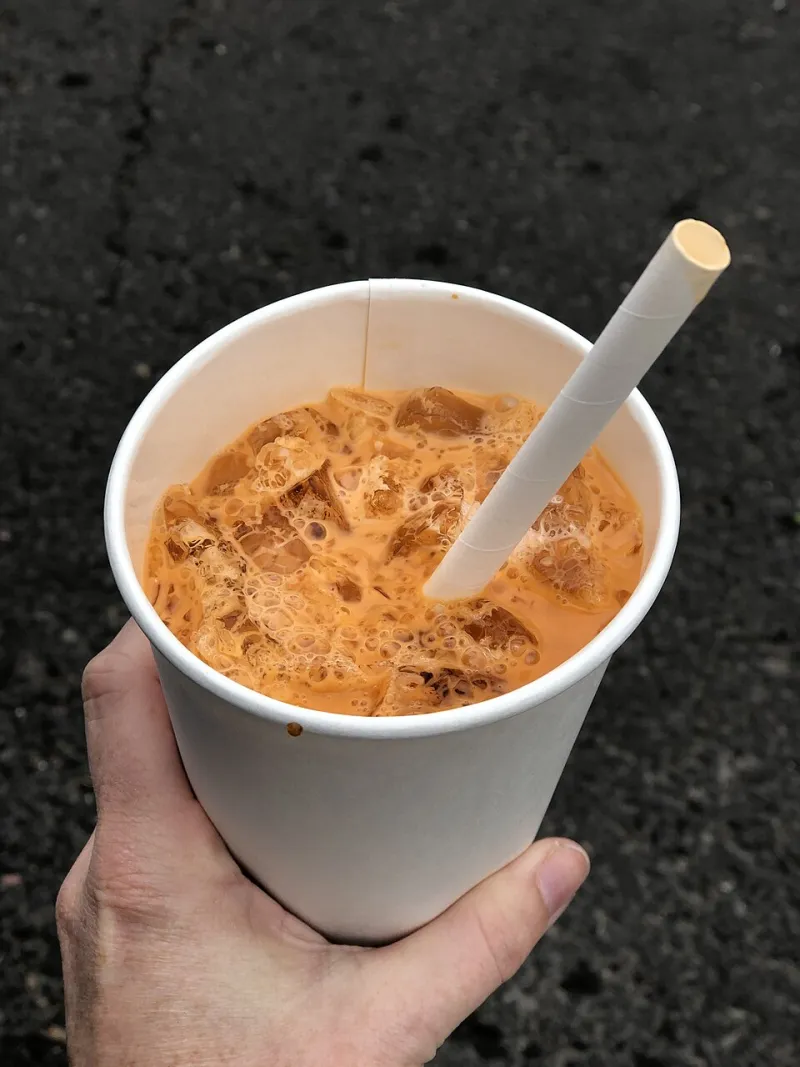
Photo: Missvain, CC BY 4.0, via Wikimedia Commons
For most of human history, if you wanted to drink something, you put the cup to your lips and tilted. The straw — in various forms, made from rye grass, bamboo, paper, and eventually metal — existed on the margins of drinking culture, a tool for the infirm, a novelty at soda fountains, a minor convenience at best. The idea that a disposable plastic tube would become a standard fixture at every restaurant, fast food counter, and convenience store in America was not inevitable. It was engineered. And the story of how it got engineered — and then dismantled in a matter of months — is one of the more striking examples of how quickly consumer behavior can reverse when the right image reaches the right audience.
The Straw Before Plastic
Marvin Stone patented the modern drinking straw in 1888. He was a cigarette manufacturer in Washington, D.C., who got tired of the taste of rye grass bleeding into his mint julep and wrapped a strip of paper around a pencil to create a more neutral tube. His paper straw was a modest success, popular at soda fountains and with people who had difficulty drinking directly from a glass.
For the next several decades, straws remained a paper product — functional, biodegradable, and quietly unremarkable. They were common at diners and lunch counters, but nobody thought of them as essential. You could take one or leave one without it meaning much either way.
The shift came with plastic. As postwar American manufacturing pivoted toward synthetic materials in the late 1940s and 1950s, the paper straw began losing ground to polypropylene versions that were cheaper to produce, more durable, and resistant to the sogginess that had always been paper's weakness. By the 1960s, the plastic straw was standard issue at fast food restaurants — a sector that was itself exploding across the country and driving enormous volumes of single-use product consumption.
Making the Straw a Statement
The plastic straw's dominance wasn't just a function of material superiority. It was actively marketed. Fast food chains and beverage companies in the 1960s and 1970s tied straws to a specific image of modern, convenient American life. Milkshake ads featured women sipping through striped straws. Fountain drinks at McDonald's and Burger King came with straws as a matter of course, whether the customer wanted one or not.
There was also a hygiene angle, deliberately cultivated. Drinking through a straw, the implicit message went, was cleaner — you weren't putting your mouth directly on a public glass. It was a subtle but effective piece of consumer psychology that attached the straw to ideas of health and modernity rather than simple convenience.
By the 1980s, Americans were using an estimated 500 million plastic straws per day. That number, which would later circulate widely during the environmental backlash, was actually derived from a phone survey conducted by a nine-year-old for a school project — a methodological footnote that got largely buried under the rhetorical momentum of the statistic itself. The actual figure was probably lower, but the order of magnitude wasn't wrong. Straws were everywhere, and nobody was thinking about where they went afterward.
Four Minutes in the Ocean
In August 2015, a marine biologist named Christine Figgener posted a video to YouTube. It showed a sea turtle that her research team had encountered off the coast of Costa Rica. The turtle had a plastic straw lodged deep in its nostril. The video, which ran about four minutes and included the uncomfortable process of removing the straw with a pair of pliers, was graphic and distressing in a way that environmental statistics rarely are.
It spread fast. Within weeks it had millions of views. Within months it had become a reference point in environmental journalism, shared by activists, celebrities, and ordinary people who found the image difficult to shake. The straw — a product so mundane it had never warranted much conscious thought — suddenly had a face attached to its consequences.
The backlash that followed moved at a speed that surprised even the people driving it. By 2018, major chains including Starbucks, McDonald's, and American Airlines had announced plans to phase out plastic straws. Seattle became the first major American city to ban them. California followed with a statewide restriction. The paper straw — the product that plastic had displaced seventy years earlier — staged a remarkable comeback, appearing in upscale bars and fast casual restaurants as a visible signal of environmental awareness.
The Industry Scrambles
For packaging manufacturers, the speed of the reversal was genuinely disorienting. Companies that had spent decades optimizing plastic straw production found themselves pivoting to paper, bamboo, stainless steel, and silicone alternatives almost overnight. Startups built entire businesses around compostable straw alternatives. The market for reusable metal straws — essentially nonexistent before 2018 — became a minor consumer goods category in its own right.
The criticism that followed was equally swift. Paper straws, many users complained, went soggy. Bamboo alternatives had their own supply chain issues. People with disabilities who relied on flexible plastic straws for accessibility found the conversation moving too fast for their needs to be accommodated. The backlash had a backlash, and the straw debate became a strange proxy war over environmental sincerity, corporate greenwashing, and the limits of individual consumer action.
What the Straw Actually Tells Us
The plastic straw story is useful precisely because it's so compressed. The arc from indispensable convenience to cultural villain happened within a single generation, and the trigger was a single piece of video footage rather than a policy change or a scientific report.
What it reveals is that consumer behavior — even deeply embedded, daily behavior — isn't as fixed as it appears. The habits we treat as natural are often the product of specific marketing decisions made at specific moments in history. The straw was made indispensable on purpose. And when the image associated with it changed, the habit changed with surprising speed.
The paper straw now sitting in your iced coffee wasn't inevitable either. It's just the current version of the same story — a product shaped by culture, image, and a moment that stuck.