Nine More Minutes: The Manufacturing Glitch That Turned Into America's Favorite Morning Ritual
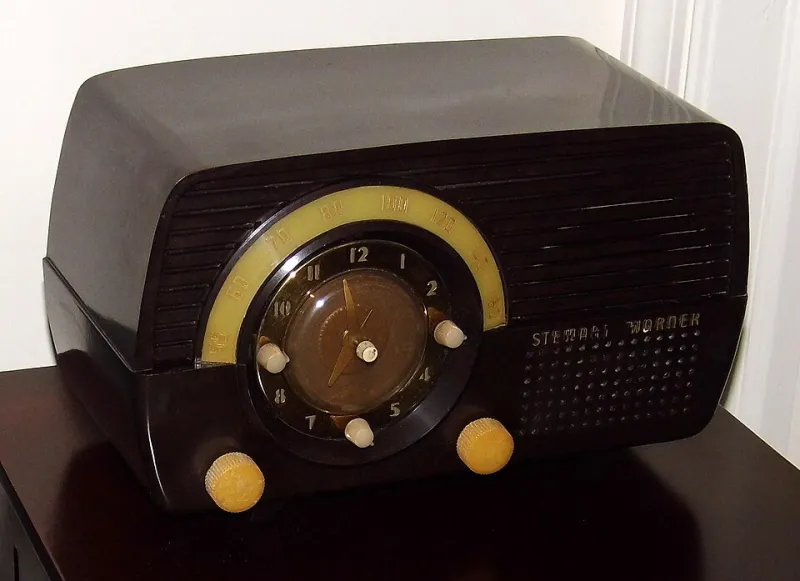
Photo: Joe Haupt from USA, CC BY-SA 2.0, via Wikimedia Commons
Every morning, somewhere in America, a hand shoots out from under a blanket and slaps an alarm clock. Not to turn it off. Just to buy nine more minutes. It's practically a national sport. But here's the thing: that nine-minute window — the very specific, oddly short, strangely universal delay — wasn't chosen by a sleep researcher or ergonomics expert. It was inherited from a manufacturing problem that nobody could solve in 1956.
The snooze button wasn't invented. It was accepted.
The Clock That Couldn't Quite Get It Right
In the mid-1950s, General Electric-Telechron was racing to bring a new feature to market: a clock that would let sleepers silence an alarm temporarily before it rang again. The idea was genuinely appealing. Postwar America was full of factory workers, commuters, and office employees who needed to be somewhere by a fixed time but didn't want to bolt upright the moment the bell went off. A little grace period seemed humane.
The problem was mechanical. The gear systems inside the clocks of that era operated on fixed intervals. Engineers working on the feature couldn't land on a clean number. Ten minutes would have been the intuitive choice — round, simple, easy to remember. But the gear ratios available to them didn't divide neatly into ten-minute segments while still syncing with the rest of the clock's movement.
Nine minutes, it turned out, was the closest they could get without retooling the entire mechanism.
So nine minutes it was. Not because anyone decided nine minutes of extra sleep was the optimal recovery window. Not because of any study or consumer research. Because the gears fit that way and the deadline was looming.
The Westclox Drowse, released around the same time, had the same constraint. Two competing companies, same awkward number, same mechanical shrug. The industry standardized around the mistake because there was no better option on the table.
The Commuter Who Couldn't Say No
What happened next is where the story gets interesting. Consumers didn't complain about the nine-minute delay. They loved it.
Postwar American life ran on schedules — train timetables, punch clocks, shift rotations. The idea of a built-in buffer, an officially sanctioned moment of delay, felt almost rebellious. You weren't being lazy. The clock was giving you permission.
Sales of snooze-equipped clocks climbed steadily through the late 1950s and into the 1960s. Clock radio manufacturers picked up the feature almost immediately, recognizing that pairing a radio wake-up with a snooze option made the whole morning experience feel less punishing. By the time the Sony Dream Machine and similar bedside staples hit living rooms in the 1970s and 1980s, the snooze button was simply assumed to be there. A clock without one felt incomplete.
The nine-minute standard traveled with the feature. Digital clocks didn't need gear ratios anymore — they could have been programmed for any interval — but nine minutes had already calcified into expectation. Manufacturers kept it because changing it would have felt strange. Users would have noticed, and not in a good way.
When Habit Became a Problem
For decades, nobody questioned whether the snooze button was actually good for you. It felt good. That was enough.
Then sleep researchers started paying closer attention.
The science that emerged wasn't flattering. When you fall back asleep after an alarm, your brain doesn't slip into restful, restorative sleep. It initiates a new sleep cycle — one that gets interrupted nine minutes later, right as it's getting going. The result is a state called sleep inertia: that foggy, sluggish, vaguely irritable feeling that can linger for up to two hours after you finally get up.
In other words, the snooze button might be making your mornings worse, not better. Sleep scientists started calling it a psychological trap — the illusion of rest without the reality of it. Some researchers now argue that a single alarm, followed by an immediate commitment to get up, produces better cognitive function and mood than a half-hour of snooze cycles.
This has not, as far as anyone can tell, slowed down snooze button usage in the slightest.
The Button That Refused to Go Away
Smartphones complicated things further. When the iPhone arrived in 2007, it carried the snooze button with it — digitally, but faithfully. Apple defaulted to nine minutes, honoring the gear-ratio ghost of 1956 inside a piece of glass and aluminum that had no gears at all. Google's Android alarm defaulted to ten minutes, which was arguably more logical but felt somehow wrong to users conditioned by decades of nine-minute intervals.
App developers have tried to disrupt the habit. Alarm apps that require you to solve a math problem, scan a barcode in another room, or physically shake your phone before silencing the alarm have attracted devoted followings among people trying to break the snooze cycle. Sleep tracking devices now offer "smart alarms" that wake you during lighter sleep phases, theoretically reducing the appeal of hitting snooze in the first place.
And yet the button persists. It's in every phone, every smart speaker, every bedside clock still sold at Target.
The Accidental Legacy
There's something almost poetic about the snooze button's origin. It wasn't born from a desire to improve sleep or honor the complexity of waking up. It was born because a gear train couldn't hit a round number, and nobody wanted to delay the product launch over it.
The engineers who made that call probably didn't think twice about it. They had a clock to ship.
What they shipped, accidentally, was one of the most universally shared daily rituals in American life — a small, stubborn act of delay that cuts across income levels, age groups, and time zones. Every morning, nine minutes at a time, America pays tribute to a manufacturing compromise nobody remembers making.
That's not a design triumph. But it might be something better: proof that the things we reach for most often aren't always the things anyone planned.