Oklahoma City Had Too Many Cars and Not Enough Curbs — So Someone Invented the Thing Everyone Hates
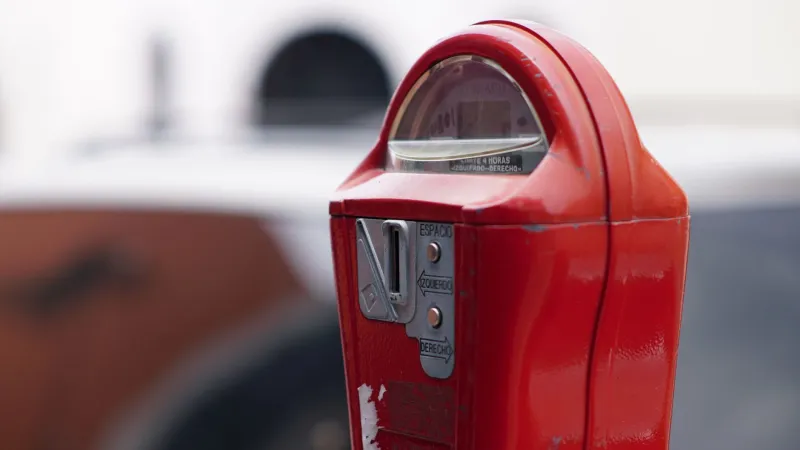
Few objects in American public life generate as much universal irritation as the parking meter. It's been vandalized, legislated against, sued over, and complained about in every city council meeting in the country for the better part of a century. Comedians mock it. Drivers resent it. Even cities that depend on the revenue it generates tend to apologize for it.
And yet it's everywhere. Hundreds of millions of them, in cities large and small, in every state in the union.
The story of how the parking meter came to exist is not the story of a government looking for new ways to tax people. It's the story of a downtown that was dying — and one engineer who thought he could save it with a coin-operated clock.
Downtown Was Drowning in Cars
By the early 1930s, the automobile had thoroughly won. Car ownership in America had exploded through the 1920s, and cities — built for pedestrians, horses, and streetcars — were struggling to absorb the volume. Nowhere was the problem more acute than in mid-sized American cities where downtown commercial districts depended on foot traffic but had no infrastructure to manage the cars that were now bringing that foot traffic in.
Oklahoma City was one of those places. By 1933, the city's downtown merchants were in trouble, but not for the reason you might expect. The problem wasn't too few customers. It was too few parking spots — or more precisely, the wrong people were using the spots they had.
Employees at downtown offices were arriving early in the morning, parking directly in front of shops, and leaving their cars there all day. By the time shoppers arrived to spend money, there was nowhere to park. Merchants watched customers drive past their storefronts, unable to stop, and take their business elsewhere. The curb had become a long-term storage facility for the wrong vehicles.
The Engineer With a Coin Slot
Carl Magee was an Oklahoma City newspaper editor and attorney who'd made a career out of agitating for things he believed in. He'd covered the Teapot Dome scandal, fought political corruption in New Mexico, and generally made himself useful as a civic irritant. When the Oklahoma City Chamber of Commerce asked him to chair a traffic committee in 1933, he approached the parking problem with the same energy he brought to everything else.
Magee's insight was straightforward: the curb was a shared resource being monopolized by a small number of long-term parkers. If you could charge for time — not for parking itself, but for the duration of parking — you'd naturally push out the all-day parkers and turn over the spaces for short-term shoppers.
He partnered with engineers at Oklahoma State University, and together they designed a device that could accept a coin, track elapsed time on a visible dial, and signal with a flag when the paid period had expired. They called it the Black Maria — a reference to the police wagons used to haul in lawbreakers, which was exactly what an expired meter would summon.
The first 150 units were installed along Park Avenue in Oklahoma City on July 16, 1935. Within a year, the city had deployed them across downtown. Within a decade, cities across the country were ordering them.
The Thing Nobody Actually Wanted
The response was immediate and furious. Drivers hated the meters. Business owners, who had initially supported the idea, began to worry that the hassle of feeding coins would drive customers away entirely. Civil liberties arguments emerged — was it legal to charge people for using a public street? Lawsuits followed in multiple cities.
Oklahoma City's own residents voted in a referendum to remove the meters. The city kept them anyway, because the data showed they were working: parking turnover had increased, merchant sales had improved, and the meters were generating revenue that paid for their own enforcement.
Magee had patented the design and formed the Magee-Hale Park-O-Meter Company, which became the dominant manufacturer of parking meters for decades. The basic mechanism he designed — coin in, dial turns, flag drops — remained largely unchanged until digital meters began appearing in the 1980s.
The Unintended Consequences
What nobody fully anticipated was how the parking meter would reshape urban geography in ways that went well beyond traffic flow.
Meter zones concentrated enforcement — and therefore commercial activity — in areas where the city chose to invest. Neighborhoods without meters were implicitly marked as secondary. The cost of metered parking, though modest by design, created friction that fell disproportionately on lower-income workers who needed to drive to jobs downtown but couldn't afford to feed meters all day. The all-day parker problem Magee was trying to solve simply migrated to adjacent unmetered streets, pushing the pressure outward rather than eliminating it.
The revenue dynamic also evolved in ways Magee didn't intend. Cities discovered that meter income was a reliable stream of funding, and the incentive to keep meters rather than solve parking problems structurally became embedded in municipal budgets. The meter stopped being a traffic management tool and became a line item.
Modern versions — solar-powered pay stations, license-plate-reading enforcement, app-based payment — have updated the technology, but the underlying logic is identical to what Magee installed on Park Avenue in 1935: make time at the curb cost something, and people will use it differently.
The Grudging Legacy
Carl Magee died in 1946, having spent the last decade of his life defending his patent and watching his invention spread to cities he'd never visited. He didn't set out to build something people would resent for generations. He was trying to save a downtown that was strangling on its own success.
The parking meter is, in that sense, one of the more honest pieces of American infrastructure. It wasn't designed to be liked. It was designed to solve a specific, unglamorous problem. That it also became a revenue tool, an urban planning instrument, and a symbol of government overreach in the minds of millions of drivers is entirely beside the original point.
Somewhere in Oklahoma City in 1935, a driver dropped a nickel into a slot and got thirty minutes at the curb. They probably grumbled about it. Some things don't change.