The Broken Amp Nobody Fixed That Gave Rock and Roll Its Soul
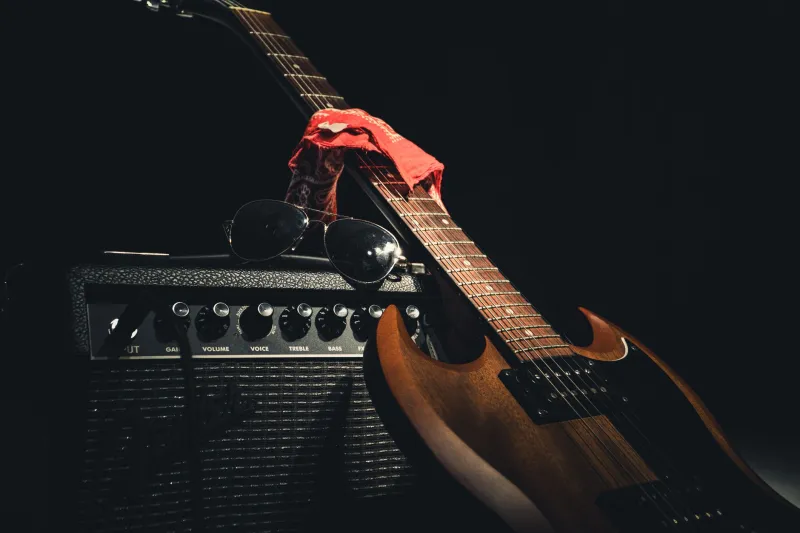
Somewhere in the mid-1940s, a guitar amplifier started dying. Its internal components were worn, its speaker cone was torn, and when a musician plugged in and played, the sound that came out was ragged, buzzing, and thick with a kind of gritty growl that no engineer had ever intended. The official response from the people who built it was simple: fix it. Get rid of that noise. Make it clean.
They never could have predicted that the "noise" they were chasing out of their equipment would one day become the most commercially powerful sound in American music history.
When Clean Was King
In the 1940s, the audio engineering world had one overriding goal — clarity. Amplifiers were supposed to reproduce sound faithfully, without coloring or distorting it. A guitar amp that buzzed, clipped, or sustained notes beyond their natural decay was considered broken. Full stop.
Gibson, Fender, and the other manufacturers building electric guitars and their associated equipment were in the business of precision. Their marketing materials emphasized warmth, clarity, and natural tone. Distortion — the technical term for what happens when an amplifier is pushed past its clean operating threshold — was a bug, not a feature. Engineers filed patents on noise-reduction circuits. Lab technicians spent hours calibrating components specifically to prevent overdrive. The entire industry was pulling in one direction.
The musicians, meanwhile, were pulling in the other.
The Clubs Where the Defects Lived
In the small roadhouses, juke joints, and low-ceilinged blues clubs scattered across Chicago's South Side, Memphis's Beale Street, and the Mississippi Delta, something different was happening. Amplifiers in these venues were old, underpowered, and frequently damaged. Replacement parts were expensive. Musicians were not. And when a guitarist cranked a worn-out amp to its limits to be heard over a rowdy Saturday night crowd, something happened to the sound that nobody had planned for.
The notes didn't just get louder. They got longer. They got fatter. They developed a sustaining, singing quality that a clean amplifier simply couldn't produce. And when the signal clipped — when it exceeded what the amp's circuitry could handle — it created harmonic overtones that added texture and aggression to every note.
Muddy Waters heard it. Howlin' Wolf heard it. A generation of electric blues players discovered that a "broken" amp could do something a working one couldn't: it could make a guitar sound like it had something to say.
 Photo: Muddy Waters, via www.bittbox.com
The Guitarist Who Made It Intentional
The transition from accidental discovery to deliberate technique happened gradually through the late 1940s and early 1950s, but one moment stands out. In 1951, a Chicago blues guitarist named Willie Kizart arrived at a recording session with a damaged amplifier — its speaker cone had been repaired with a piece of paper, leaving the output permanently distorted. Rather than delay the session, producer Sam Phillips decided to record anyway.
 Photo: Willie Kizart, via thumbs.dreamstime.com
The result was "Rocket 88" by Jackie Brenston and his Delta Cats, widely cited by music historians as one of the earliest records to feature intentional amp distortion as a sonic choice rather than a technical failure. The song was a hit. The sound traveled.
Within a few years, guitarists weren't waiting for their amps to break. They were breaking them on purpose — slashing speaker cones with pencils, stuffing tubes with cloth, overdriving their circuits by design. When Dave Davies of The Kinks sliced his speaker cone with a razor blade in 1964 to get the grinding sound on "You Really Got Me," he was following a tradition that had started in rooms where nobody could afford to buy a new amp.
 Photo: Dave Davies, via le-de.cdn-website.com
The Patent That Arrived Too Late
The corporate world eventually caught up, though not without resistance. When Gibson engineer Seth Lover developed the humbucker pickup in 1955 — a device designed to eliminate electromagnetic hum and produce cleaner tone — the patent application moved slowly through a system that wasn't entirely sure what guitarists actually wanted. Meanwhile, the market was already moving toward the sound that clean technology was designed to prevent.
Fender's attempts to engineer distortion out of their amplifier lines in the early 1960s ran directly into a generation of players who were actively seeking it. By the time the first commercial distortion pedal — the Maestro Fuzz-Tone — hit the market in 1962, the industry had finally accepted that the defect it had spent fifteen years trying to eliminate was, in fact, the product.
King Records, Chess Records, and Sun Studio had understood this years earlier. They just didn't have a patent for it.
What a Flaw Built
It's worth pausing to consider what the clean-sound engineers were actually trying to protect. In their world, a perfect amplifier was invisible — a neutral conduit between the musician and the audience. What the blues players in those overheated clubs discovered was that imperfection had its own voice. The distortion wasn't obscuring the guitar. It was becoming part of it.
That philosophical shift — from tool to instrument, from neutral to expressive — is what makes this origin story matter beyond the technical details. Rock and roll, in its most basic sonic form, is built on a manufacturing flaw. The sustain that defines a Hendrix solo, the crunch behind a Chuck Berry riff, the feedback wail that opens a Velvet Underground track — all of it traces back to amplifiers that engineers considered defective and musicians considered essential.
The next time you hear a guitar player hold a note until it blooms into something enormous, remember: somebody once tried very hard to stop that from happening. A generation of broke musicians in small clubs decided they were wrong. And American music has never sounded the same since.