Five Days On, Two Days Off: The Immigrant Labor Fight That Quietly Rewrote the American Calendar
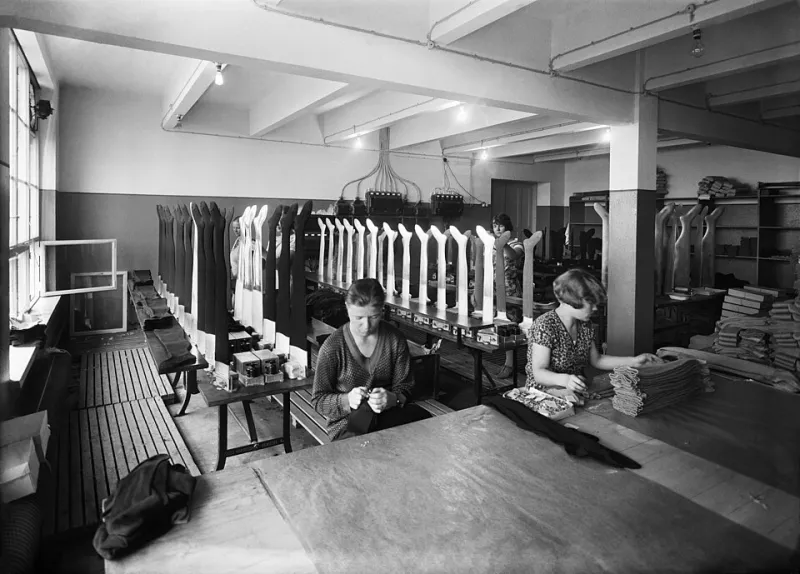
Photo: Olof Sundström, CC BY 4.0, via Wikimedia Commons
You probably didn't think much about the weekend when it arrived last Friday afternoon. You clocked out, maybe grabbed takeout on the way home, and settled into roughly 60 hours of time that felt entirely yours. That rhythm — five days of work, two days of rest — feels as fixed as the calendar itself. But someone had to invent it. And the story of how it happened is stranger, and more specific, than most people ever imagine.
A Six-Day Nation
For most of American industrial history, the workweek ran six days. Monday through Saturday, sunup to sundown, with Sunday carved out as the Christian day of rest. That was the deal. Factories, mills, and workshops across the country ran on that schedule without much argument, and the idea of giving workers an additional full day off would have struck most industrialists as borderline radical.
But by the early twentieth century, American cities were filling up with immigrant workers who didn't observe Sunday as their day of rest. Jewish immigrants — many of them skilled textile workers who had come from Eastern Europe — observed the Sabbath on Saturday. Working through Saturday wasn't just inconvenient for them. It was a genuine religious conflict, one that put them in an impossible position: keep their faith or keep their jobs.
In the mills and garment factories of New England, this tension quietly simmered for years.
The Mill in Pawtucket
The story sharpens around a textile manufacturer named Edward Filene — yes, the same family behind the Boston department store — and more critically, around the workers at mills in Massachusetts and Rhode Island who were pushing back against the six-day structure in the early 1920s.
The Amoskeag Manufacturing Company in Manchester, New Hampshire, and similar operations throughout New England employed large numbers of Jewish workers who had organized informally around the issue of Saturday labor. Their argument was straightforward: if Christian workers received Sundays off without question, why should Jewish workers be forced to choose between their paycheck and their Sabbath?
The negotiation that followed wasn't a grand national movement at first. It was a practical, mill-level compromise. If Jewish workers could have Saturday off, they would work a full and productive five-day week — and the math, it turned out, wasn't catastrophic for the owners.
Henry Ford Enters the Picture
Here's where the story takes a turn that nobody quite expected. Henry Ford — a man not generally celebrated for his progressive labor views — became one of the earliest major industrial adopters of the five-day workweek, announcing in 1926 that his Ford Motor Company plants would shift to a Monday-through-Friday schedule.
Ford's reasoning was only partly humanitarian. He had a theory, controversial at the time, that workers who had more leisure time would spend more money — and spending more money meant buying more products, including, not coincidentally, Ford automobiles. Rest, in Ford's framing, wasn't charity. It was economic stimulus.
His announcement gave the five-day week a legitimacy it hadn't previously had in the broader industrial world. If Ford could run one of the most productive manufacturing operations in America on five days, the argument that six days were structurally necessary started to fall apart.
The Depression Seals the Deal
The Great Depression, ironically, finished what Ford and the textile workers had started. With unemployment catastrophic and millions of Americans out of work, labor unions began pushing the five-day week not just as a rest benefit but as a job-sharing strategy. If existing workers put in fewer hours, the logic went, more people could be employed.
The Fair Labor Standards Act of 1938 made the forty-hour workweek federal law, establishing overtime requirements for anything beyond it. The two-day weekend wasn't explicitly mandated — Sunday remained the traditional rest day, and Saturday simply defaulted into the break alongside it — but the forty-hour cap effectively locked in the structure that immigrant textile workers had fought for two decades earlier.
What We Inherited Without Knowing It
The weekend as Americans now experience it — Saturday morning cartoons, Sunday afternoon cookouts, the Friday feeling — is a cultural architecture built on a foundation most people have never examined. It came from a religious accommodation in a New England mill. It was industrialized by a car manufacturer with an eye on consumer spending. And it was codified during an economic catastrophe as a way to spread scarce work across more hands.
None of those origins feel particularly glamorous. There's no single heroic moment, no famous speech, no monument marking the spot where someone decided Americans deserved two days off. It accumulated, the way most cultural facts do, through argument and compromise and a lot of people refusing to accept a situation that didn't work for them.
Next time the weekend arrives, it's worth remembering that someone had to fight for the first one. And the fight started because a group of immigrant workers wanted to observe their Sabbath without losing their livelihood — a demand so reasonable it eventually reshaped how an entire nation spends its time.