The Factory Floor Fix That Gave America Saturday: What a Drug Company's Production Crisis Actually Built
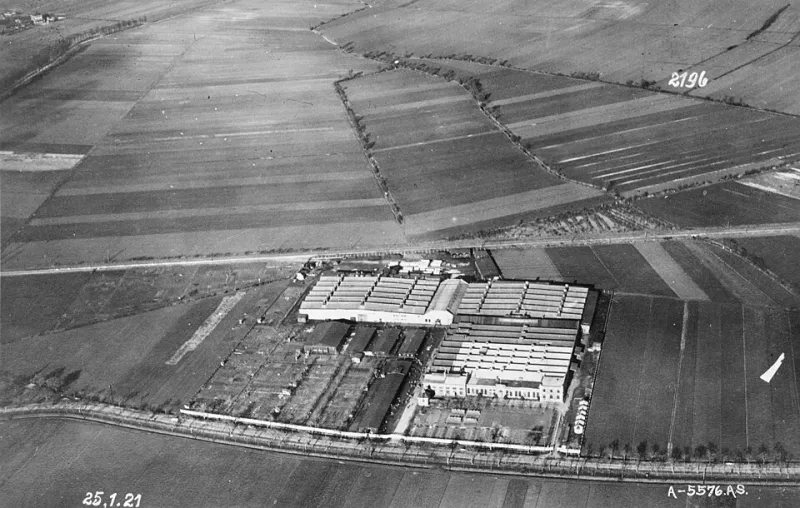
Photo: Unknown authorUnknown author or not provided, Public domain, via Wikimedia Commons
Ask most Americans where the weekend came from and you'll get a version of the same answer: unions fought for it, labor organizers marched for it, and eventually the law caught up. That's true, and it's an important part of the story. But it's not the whole story.
The five-day workweek didn't arrive all at once through a single legislative victory. It crept into American industry through a combination of political pressure, corporate calculation, and at least one pivotal business decision made not out of generosity, but out of desperation. The pharmaceutical industry's role in that story is almost entirely forgotten — which is a shame, because it's more interesting than the standard version.
The Six-Day Week and Its Discontents
For most of American industrial history, the six-day workweek was simply the default. Workers showed up Monday through Saturday, took Sunday off because blue laws and religious tradition demanded it, and started again the following week. Seventy-hour weeks weren't unusual in the decades following the Civil War. Even as the labor movement chipped away at working hours through the late 1800s and early 1900s, Saturday remained a workday in nearly every sector of the American economy.
The push to reclaim Saturday had multiple fronts. Jewish workers and business owners in industries like garment manufacturing had long argued for Saturday as a day of rest, consistent with Sabbath observance. Labor unions tied the shorter workweek to productivity arguments — that rested workers made fewer mistakes and produced more per hour than exhausted ones. Henry Ford, motivated partly by the belief that workers who had leisure time would spend money on consumer goods (including his cars), shifted his factories to five days in 1926. That move got attention.
But Ford's decision, influential as it was, applied to his own factories. It didn't set a legal standard. It didn't change the calculus for industries that weren't building automobiles. What pushed the five-day week from a progressive experiment to an industrial norm involved a chain of events that passed through the pharmaceutical sector in ways that business historians have largely overlooked.
The Production Problem Nobody Saw Coming
In the 1920s, American pharmaceutical manufacturing was scaling up rapidly. The decade following World War One saw enormous investment in drug production — synthetic compounds, refined chemical processes, and factory-scale output that bore little resemblance to the apothecary model of the previous century.
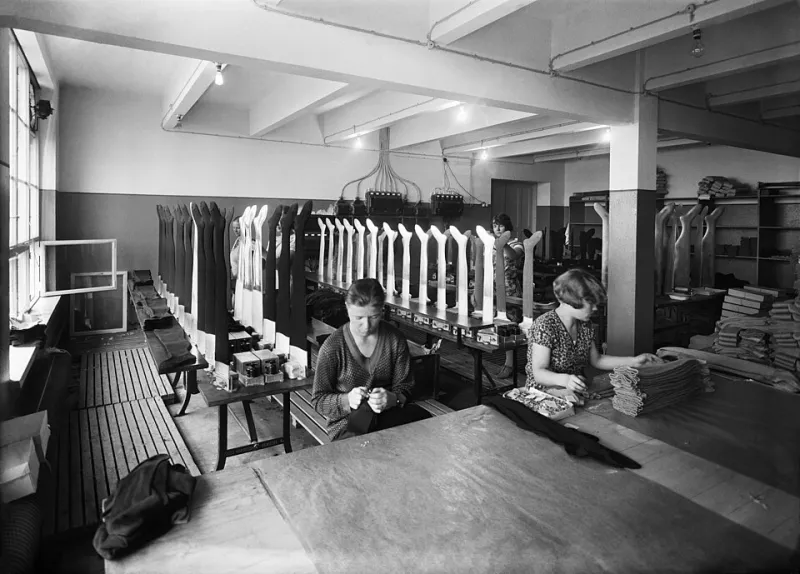
The challenge these facilities faced was not simply one of machinery or raw materials. It was human. Precision chemical manufacturing requires consistency. Contamination, mistimed reactions, and dosing errors don't just waste product — in pharmaceutical contexts, they can make product dangerous. And the workers running these processes, after five and a half or six days of rotating shift work, were making more mistakes.
Fatigue-related production errors in pharmaceutical plants carried a cost that went beyond the financial. Regulatory scrutiny was increasing. The reputational risk of a contaminated batch reaching the public was existential in a way it simply wasn't for, say, a textile mill. Plant managers started tracking error rates against shift schedules and found a pattern that was difficult to ignore: the quality of work degraded measurably as the week extended.
Several manufacturers, working independently and without any coordinated policy agenda, began experimenting with reduced schedules in the early 1920s. The goal wasn't worker welfare in any idealistic sense. It was yield protection. A rested chemist made fewer errors. Fewer errors meant less waste. Less waste meant better margins on products that were expensive to produce.
What they discovered, running the numbers over months of trials, was that five days of reliable output beat six days of declining output on almost every metric that mattered.
From Experiment to Expectation
The pharmaceutical industry's internal shift toward five-day schedules didn't happen in a vacuum. It coincided with — and quietly reinforced — the broader labor movement's campaign for the shorter workweek. When manufacturers who had no particular sympathy for organized labor arrived at the five-day week through pure operational logic, it changed the argument.
Union organizers had been making the moral and economic case for years. Now they had corporate converts who'd done the math and reached the same conclusion. Industry groups that might have resisted the change on principle found it harder to argue against when their peers in precision manufacturing were reporting better output, lower error rates, and reduced turnover.
The political machinery caught up in 1938, when the Fair Labor Standards Act established the forty-hour week as the federal standard, requiring overtime pay for hours beyond that threshold. The law didn't ban Saturday work — it just made it expensive. Employers who'd already discovered the productivity benefits of the five-day schedule had little incentive to push past it. Those who hadn't were now facing a financial penalty for doing so.
Saturday didn't disappear from American workplaces overnight. Many industries held onto the half-day Saturday for years afterward. But the legal and economic framework was in place, and the cultural shift followed.
Saturday Becomes Something Else Entirely
What happened next is the part of the story that tends to get underappreciated: once Saturday was free, Americans had to figure out what to do with it.
The answer, it turned out, was to spend money. The leisure economy that exploded in the postwar decades — movie theaters, sports attendance, roadside restaurants, vacation travel, home improvement projects — was built on the assumption that Americans had a free Saturday to fill. Retailers restructured their peak hours around weekend traffic. The concept of the "weekend getaway" emerged as a distinct product category in the travel industry. Saturday afternoon became prime time for youth sports leagues, which reshaped suburban community life in ways still visible today.
None of that was planned by the pharmaceutical plant managers who started trimming their Saturday shifts to reduce error rates in the early 1920s. They were solving a production problem. The leisure economy was an unintended downstream effect of a decision made entirely for operational reasons.
The Weekend's Complicated Birthday
The five-day workweek is usually remembered as a labor victory, and in the most important sense, it was. Organizers, strikers, and political advocates spent decades fighting for it. Their work was real and the cost was significant.
But the timeline reveals something more complicated. The weekend arrived through a collision of moral argument, political pressure, corporate self-interest, and — less glamorously — pharmaceutical quality control data from factories most people have never heard of.
The Saturday you spend at the farmers market, the game, or doing absolutely nothing didn't come from a single heroic moment. It came from all of those forces pushing in the same direction at once, for entirely different reasons.
Somehow, that makes it feel more earned — and more fragile — than the simple version of the story suggests.