From Willow Bark to Medicine Cabinet: The Very Human Story Behind Aspirin
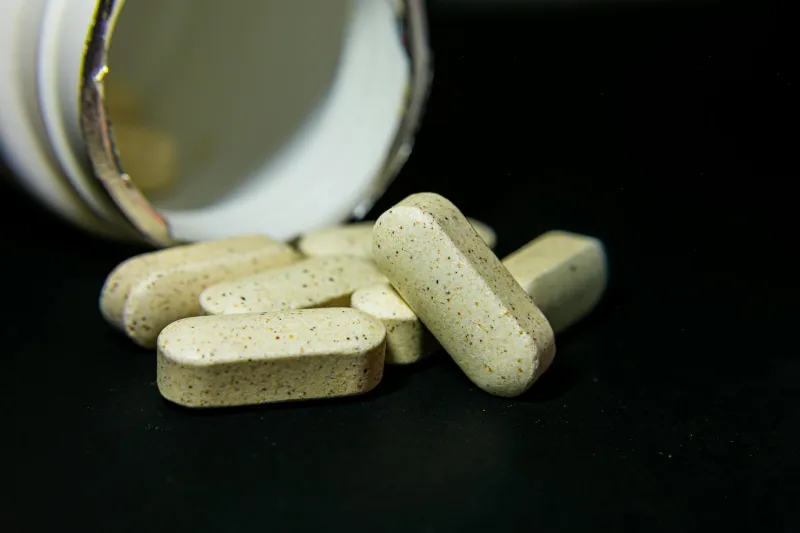
From Willow Bark to Medicine Cabinet: The Very Human Story Behind Aspirin
There's a good chance you have a bottle of aspirin somewhere in your home right now. Maybe it's in the bathroom cabinet, maybe it's rattling around in a kitchen drawer, maybe it's in your car's glove compartment next to a crumpled receipt. You probably didn't think much about buying it. It was just there on the shelf, cheap, familiar, and completely taken for granted.
That familiarity is kind of remarkable when you trace it back. Because aspirin didn't arrive in the world quietly or on schedule. It stumbled in through a combination of ancient knowledge, a son's devotion to his sick father, and a pharmaceutical company that very nearly decided the whole thing wasn't worth their time.
A Remedy as Old as Civilization
The story starts long before any lab coat was involved. Ancient Egyptians were already using preparations made from willow bark to treat pain and fever around 3000 BCE. Greek physician Hippocrates — the same one doctors still invoke with their oath — recommended willow bark tea to women during childbirth. For thousands of years, healers across Europe and the Americas were reaching for the same plant without knowing why it worked.
The "why" didn't arrive until the 19th century. In 1828, a German pharmacist named Johann Andreas Buchner managed to isolate the active compound from willow bark and called it salicin. Chemists refined it further into salicylic acid, which did reduce pain and fever effectively. The problem was that it tasted awful and absolutely wrecked the stomach lining. Patients were essentially trading a headache for a stomachache, and doctors weren't exactly lining up to prescribe it.
For decades, the chemistry sat there, useful but unpleasant — a promising idea that nobody had quite figured out how to make livable.
The Son Who Changed Everything
Enter Felix Hoffmann, a young chemist working at the German pharmaceutical company Bayer in the late 1890s. Hoffmann's father suffered from severe rheumatoid arthritis and had been taking salicylic acid to manage the pain. The side effects were making him miserable. According to one widely told account — though historians debate its precise details — Hoffmann set out specifically to find a more tolerable version of the compound for his father's sake.
In 1897, Hoffmann successfully synthesized acetylsalicylic acid in a stable, usable form. It was chemically similar to salicylic acid but significantly gentler on the digestive system while retaining all the pain-relieving benefits. In a very real sense, he had solved the problem that had stalled this compound for half a century.
But here's where the story takes an unexpected turn: Bayer wasn't immediately sold on it.
The company's chief pharmacologist at the time, Heinrich Dreser, was reportedly dismissive of the new compound. He was far more enthusiastic about another drug Hoffmann had synthesized around the same period — diacetylmorphine, which Bayer would market under the name heroin. Dreser believed heroin had more commercial potential and pushed resources in that direction.
Aspirin almost got shelved before it ever reached a single patient.
The Reluctant Launch That Changed Medicine
Fortunately, enough people at Bayer saw promise in the new compound that it moved forward anyway. In 1899, Bayer began distributing acetylsalicylic acid to physicians under the trade name Aspirin — the "a" from acetyl, "spir" from Spiraea ulmaria (the plant used in the synthesis), and "in" as a common pharmaceutical suffix at the time.
The response from the medical community was immediate and enthusiastic. Here was something that actually worked, could be taken orally, and didn't leave patients in digestive agony. Demand grew quickly across Europe, and Bayer began exporting to the United States not long after.
Then came 1918, and the Spanish flu pandemic. Aspirin's ability to reduce fever placed it at the center of the global response to one of the deadliest outbreaks in human history. Demand became almost impossible to keep up with. The drug's reputation as a genuine, trustworthy medicine became deeply embedded in the public consciousness — especially in America, where the flu hit hard and aspirin was widely distributed.
A Century of Surprises
What's remarkable is that aspirin didn't stop being interesting after it went mainstream. Decades after its commercial launch, researchers kept finding new things it appeared to do. In the 1970s, British pharmacologist John Vane figured out the mechanism by which aspirin inhibits prostaglandins — the compounds responsible for inflammation and pain signaling — work that eventually earned him a Nobel Prize.
Around the same time, studies began suggesting that low-dose aspirin could reduce the risk of heart attack by preventing blood clots. That finding shifted aspirin from a headache remedy into something cardiologists actively recommended. It became a drug with two completely separate use cases — one that millions of Americans follow to this day.
More recently, researchers have explored possible links between regular aspirin use and reduced risk of certain cancers, though those findings remain under active study and medical guidance has evolved around them.
Still Reaching for It
Aspirin is over 125 years old as a commercial product. Dozens of newer pain relievers have come along — ibuprofen, acetaminophen, naproxen — and yet aspirin hasn't disappeared. It remains one of the best-selling drugs on earth, still manufactured in quantities that are genuinely hard to picture.
The next time you twist open that childproof cap without a second thought, consider the trail behind that little tablet. Willow trees. Ancient Egyptian healers. A son trying to ease his father's pain. A pharmaceutical company that almost bet on the wrong drug. A flu pandemic that cemented its place in American homes.
Some things earn their place in your medicine cabinet over a very long time.