Flash a thumbs-up today and everyone knows what you mean: approval, agreement, "all good." Hit the thumbs-up button on social media and you've communicated positivity in the universal language of the internet. But this gesture that feels ancient and instinctive actually has surprisingly modern roots—and they have nothing to do with Roman gladiators.
The Roman Myth That Won't Die
Ask most Americans about the thumbs-up, and they'll confidently tell you it comes from ancient Rome. Gladiators lived or died by the emperor's thumb, right? Thumbs-up meant life, thumbs-down meant death. It's a story so embedded in popular culture that it feels like historical fact.
Except it's almost certainly wrong. Roman historians describe crowd gestures during gladiatorial games, but they're frustratingly vague about the details. The Latin phrase "pollice verso" literally means "turned thumb," but doesn't specify which direction. Some scholars think a hidden thumb (tucked into the fist) meant mercy, while an extended thumb—in any direction—meant death.
The modern thumbs-up-means-good interpretation? That's largely thanks to an 1872 painting by French artist Jean-Léon Gérôme called "Pollice Verso," which depicted Romans giving thumbs-down for death. Hollywood ran with the imagery, flipping it to make thumbs-up the opposite: life and approval.
When Noise Created a New Language
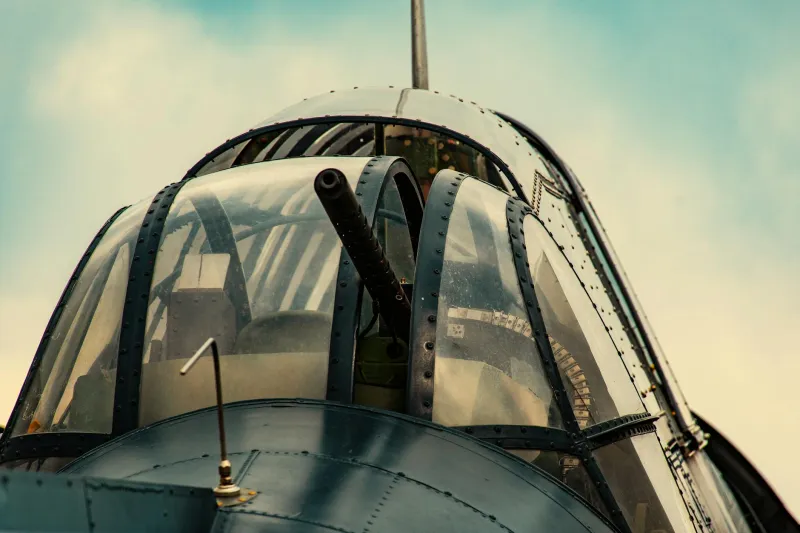
The real story of America's thumbs-up begins in the noisy, dangerous world of World War II aviation. Fighter pilots and ground crews needed to communicate across flight decks where engine noise made shouting impossible. Hand signals became essential for everything from "engine start" to "all clear."
The thumbs-up emerged as the perfect "ready to go" signal. Unlike more complex hand gestures, it was visible from a distance, unambiguous in meaning, and impossible to confuse with anything else. Pilots used it to signal readiness for takeoff, ground crews used it to indicate mechanical checks were complete, and it quickly became the standard "A-OK" gesture across American military aviation.
From Military to Mainstream
Returning veterans brought the thumbs-up home with them, but it didn't immediately catch on in civilian life. The gesture remained primarily military slang through the 1940s and early 1950s. What changed everything was the rise of television and popular culture's fascination with aviation heroes.
Shows like "Sky King" and movies featuring fighter pilots introduced the thumbs-up to American living rooms. The gesture carried all the cool authority of military aviation—it was confident, decisive, and unmistakably American. By the 1960s, it had evolved beyond its practical origins to become a general expression of approval and positivity.
The Fonzie Effect
The thumbs-up's transformation into America's signature gesture got a massive boost from an unlikely source: Arthur "Fonzie" Fonzarelli on "Happy Days." The character's trademark "ayyyy" accompanied by a thumbs-up became one of television's most recognizable catchphrases in the 1970s.
Fonzie's thumbs-up wasn't military—it was pure cool. The gesture now meant not just "okay" or "ready," but "awesome," "perfect," and "you've got my approval." It was the kind of casual confidence that defined American pop culture, and it spread far beyond television screens.
Going Global in the Digital Age
The internet age transformed the thumbs-up from American cultural export to global standard. Early chat rooms and forums used text-based emoticons, but the thumbs-up was too perfect a gesture to ignore. When Facebook introduced the "like" button in 2009, they initially considered various symbols before settling on the thumbs-up as the most universally understood sign of approval.
That decision had massive cultural implications. Suddenly, billions of people worldwide were using an American military gesture dozens of times per day. The thumbs-up became the default way to express approval online, crossing language barriers and cultural boundaries with unprecedented speed.
The Gesture That Rewrote Social Rules
What makes the thumbs-up story remarkable isn't just its rapid evolution—it's how completely it replaced older approval gestures. Previous generations might have nodded, smiled, or said "good job." The thumbs-up offered something different: instant, visible, unmistakable positivity that worked across distances and noise barriers.
This practicality explains its staying power. In an increasingly fast-paced, noisy world, the thumbs-up solved communication problems that people didn't even realize they had. It was efficient, friendly, and carried just enough casual authority to feel both approachable and confident.
From Signal to Symbol
Today's thumbs-up bears little resemblance to its World War II origins. What started as a practical solution for noisy flight decks has become a global symbol of approval, agreement, and positivity. It's been emoji-fied, commercialized, and integrated so thoroughly into daily communication that most people can't imagine expressing approval without it.
The next time you give someone a thumbs-up—or tap that little icon on your phone—remember the fighter pilots who created America's most successful cultural export. They were just trying to communicate over engine noise, but they accidentally invented a gesture that would reshape how the entire world expresses approval. Not bad for a simple hand signal.