OK: The Two-Letter Word That Started as a Joke and Conquered the Planet
OK: The Two-Letter Word That Started as a Joke and Conquered the Planet
You say it dozens of times a day without thinking. Your parents say it. Your kids say it. People who don't speak a word of English say it. 'OK' might be the single most widely understood expression in human history — and almost nobody knows where it came from.
The answer is stranger than you'd expect: it started as a spelling joke in a Boston newspaper, got accidentally supercharged by a presidential election, and then quietly slipped into the vocabulary of the entire world.
Boston, 1839, and the Art of the Deliberate Typo
To understand where 'OK' came from, you have to understand a very specific kind of 19th-century American humor.
In the late 1830s, it was fashionable in certain Boston and New York literary circles to abbreviate phrases — and then deliberately misspell the abbreviations. It sounds labored, but it was the era's version of ironic internet slang. Phrases like 'no go' became 'K.G.' (for 'know go'). 'All right' was sometimes rendered as 'O.W.' (for 'oll wright'). It was playful, self-aware, and slightly absurdist.
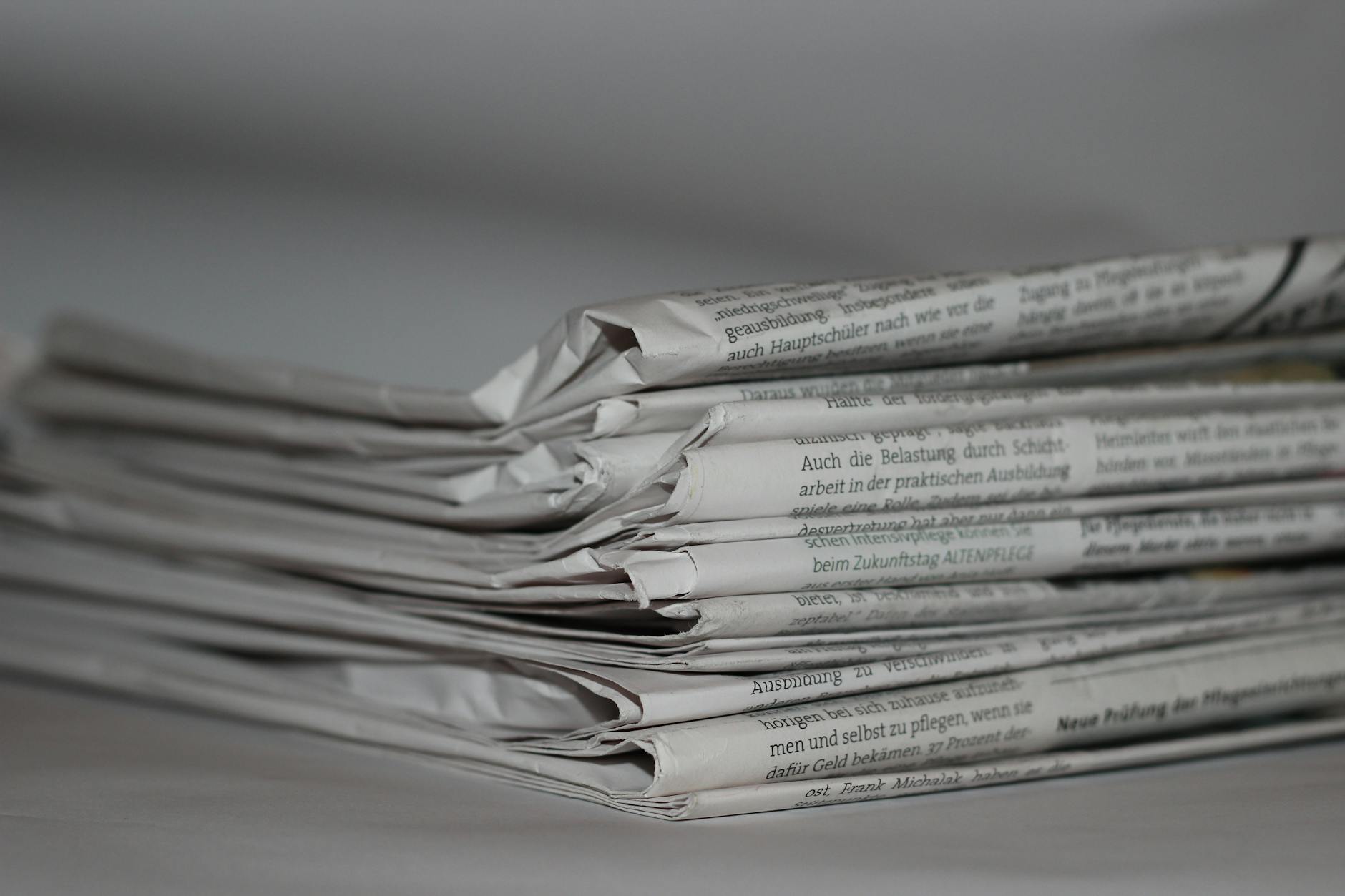
On March 23, 1839, the Boston Morning Post printed the abbreviation 'O.K.' — standing for 'oll korrect,' a joke misspelling of 'all correct.' It was a throwaway gag in a humor column, the kind of thing that might get a chuckle and then disappear forever.
For about a year, it did exactly that.
The President Who Gave It Legs
Then came the 1840 presidential election, and everything changed.
Andrew Jackson's vice president and political successor, Martin Van Buren, was running for reelection. Van Buren was from Kinderhook, New York, and his supporters had taken to calling him 'Old Kinderhook' — which they shortened, conveniently, to 'O.K.' They formed Democratic clubs called 'O.K. Clubs' and used the phrase as a rallying slogan. Suddenly, 'OK' was everywhere — printed on banners, shouted at rallies, splashed across newspapers from New York to Ohio.
Van Buren lost the election. But 'OK' survived him.
The combination of the original newspaper joke and the political campaign gave the word something rare: two separate, high-profile moments of visibility in quick succession. People who'd never seen the Boston Morning Post column had now seen 'OK' on campaign literature. It had momentum.
Why This Explanation Holds Up
It's worth noting that 'OK' has attracted a lot of origin theories over the years. Some claim it comes from the Choctaw word 'okeh.' Others trace it to a Scots-Irish expression, a West African phrase, or even a Greek shipping term. There's a persistent myth that Andrew Jackson himself used to mark documents 'O.K.' as a misspelling of 'all correct.'
Most of these theories don't hold up to scrutiny. The one that does — the Boston newspaper joke, confirmed by the 1840 political campaign — comes primarily from the research of Columbia University linguist Allen Walker Read, who spent decades tracing 'OK' through 19th-century American print records in the 1960s. His findings remain the most rigorously documented account of the word's origin.
The fact that so many competing theories exist is itself revealing. 'OK' is so universal, so deeply embedded in global communication, that dozens of cultures have tried to claim it as their own.
From Slang to Infrastructure
What's remarkable about 'OK' isn't just where it came from — it's how completely it escaped its origins.
By the late 19th century, it had spread through telegraphs and railroads as a quick confirmation signal. By the 20th century, it was in films, radio broadcasts, and eventually every digital interface ever designed. The word 'OK' appears on buttons, screens, and confirmation prompts used by billions of people every day. NASA astronauts use it. Air traffic controllers use it. It has been spoken on the moon.
And none of that has anything to do with Martin Van Buren or a humor column in a Boston newspaper.
That's the thing about language — it doesn't care about its own history. A throwaway joke from 1839 became the default expression of agreement for the entire human race, and the people who made that joke never knew it was happening.
The Accidental Lingua Franca
There's something genuinely strange about the fact that the world's most recognized word is American, less than 200 years old, and started as a deliberate misspelling for comedic effect.
Language usually feels ancient, organic, inevitable. 'OK' is a reminder that sometimes the words we can't live without were invented on a Tuesday afternoon by someone making a joke — and that the world just... kept using them.
Next time you type 'ok' in a text message, you're echoing a Boston newspaper columnist who thought he was being funny. He was right. He just had no idea how far the joke would travel.