
The Dentist Who Accidentally Invented Retail Psychology
Dr. Eugene Orowitz had a problem. His dental patients in the 1930s were so terrified of the drill that they'd cancel appointments, faint in the waiting room, or grip the chair arms so tightly he couldn't work on their teeth.
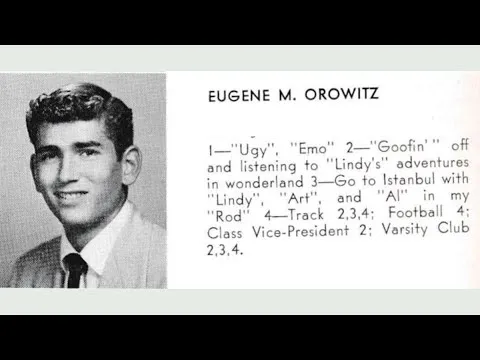 Photo: Dr. Eugene Orowitz, via i.ytimg.com
So in 1934, Dr. Orowitz tried something radical: he started piping soft, instrumental music into his office through a primitive speaker system. Not to entertain patients — to drug them with sound.
The results were immediate and bizarre. Patients relaxed. Procedures went faster. People actually started showing up for their appointments.
Dr. Orowitz had stumbled onto something that would quietly reshape American commercial life forever. He just didn't know it yet.
When Silence Was Golden
To understand how revolutionary background music was, you need to picture 1930s America. Public spaces were mostly silent. Stores, offices, and waiting rooms operated in relative quiet, broken only by conversation and business sounds.
Music was an event. You went to concerts, turned on the radio, or played records at home. The idea of filling everyday spaces with continuous, barely-audible melodies seemed absurd — even vaguely sinister.
But a retired Army general named George Owen Squier was about to change all that.
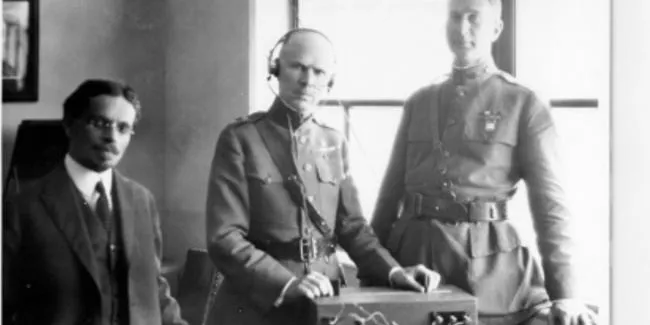 Photo: George Owen Squier, via alchetron.com
The General's Wireless Vision
Squier had made his fortune developing radio transmission technology for the military. After leaving the Army, he'd founded a company that delivered radio signals over electrical power lines — an early attempt at what we'd now call cable service.
The business was struggling until Squier heard about Dr. Orowitz's dental office experiments. Suddenly, he saw a completely different market: selling mood control to American businesses.
In 1936, Squier rebranded his company with a name that combined "music" and "Kodak" — suggesting that background sound could be as ubiquitous and reliable as photography. He called it Muzak.
The Science of Invisible Manipulation
Muzak wasn't just playing random songs quietly. Squier hired industrial psychologists to engineer what they called "Stimulus Progression" — carefully sequenced musical programs designed to manipulate energy levels and productivity.
The formula was surprisingly sophisticated. Muzak programs followed 15-minute cycles that gradually increased in tempo and energy, then reset to a calmer baseline. The idea was to provide subliminal motivation without listeners realizing they were being influenced.
Factory owners loved it. Studies showed that workers moved faster, made fewer mistakes, and complained less when Muzak was playing. The company marketed this as "functional music" — not entertainment, but industrial efficiency delivered through barely-audible melodies.
From Factories to Elevators
By the 1940s, Muzak was expanding beyond industrial settings. Office buildings started subscribing to reduce employee fatigue. Hotels piped it into lobbies to create a "welcoming atmosphere." Elevators became Muzak's most famous venue — a place where trapped passengers had no choice but to absorb the company's carefully crafted audio programming.
The elevator association was so strong that "elevator music" became synonymous with bland, instrumental background sound. But Muzak executives saw this as validation, not mockery. They'd created music so perfectly unobtrusive that people barely noticed it — which was exactly the point.
The Retail Revolution
The real breakthrough came in the 1950s when American retailers discovered that background music could influence shopping behavior. Grocery stores found that slower tempos made customers linger longer and spend more money. Fast tempos moved people through checkout lines more efficiently.
Department stores began programming different musical moods for different sections — energetic music in the electronics department, soothing melodies in the lingerie section. Muzak's industrial psychologists developed elaborate charts correlating musical characteristics with purchasing patterns.
By the 1960s, Muzak claimed their programming was heard by 100 million Americans every day. The company had essentially created a parallel music industry focused not on artistic expression but on behavioral modification.
The Backlash That Made It Stronger
As Muzak became ubiquitous, it also became a cultural punching bag. Critics called it "musical wallpaper" and "aural pollution." The term "muzak" (lowercase) entered the dictionary as a synonym for bland, commercial background music.
But the mockery missed the point. Muzak wasn't trying to be good music — it was trying to be effective music. And by that measure, it was working perfectly.
Restaurants reported that the right background music increased table turnover. Shopping malls found that carefully programmed soundtracks kept people browsing longer. Even dentists — where the whole thing started — continued using background music to manage patient anxiety.
The Spotify Inheritance
Muzak as a company eventually faded, but its core insight — that background music could shape behavior and mood — became the foundation of modern retail psychology. Today's Spotify playlists for coffee shops, gym chains, and clothing stores are direct descendants of those 1930s dental office experiments.
Algorithms now do what Muzak's industrial psychologists once did by hand: analyze musical characteristics and match them to desired emotional outcomes. The "Chill Indie Folk" playlist at your local café and the "High Energy Workout" mix at the gym are both engineered to influence your behavior, just like Dr. Orowitz's waiting room speakers.
The Soundtrack We Don't Hear
What's fascinating about the Muzak story is how completely it succeeded by failing to be noticed. Most Americans today move through a world filled with carefully programmed background music — in stores, restaurants, offices, and elevators — without consciously registering that it's there.
We've been trained to expect ambient sound in commercial spaces. Silence now feels awkward and uncomfortable in places where it was once the norm. Dr. Orowitz's experiment in calming dental patients accidentally rewired American expectations about what public spaces should sound like.
Every time you unconsciously tap your foot to the music in a grocery store, or feel slightly more energetic walking through a mall, or find yourself inexplicably relaxed in a hotel lobby, you're experiencing the legacy of a nervous dentist who just wanted his patients to stop gripping the chair arms so tightly.
The most successful revolution in American commercial culture was the one nobody was supposed to notice.