Every morning, millions of Americans flip a switch and listen to the familiar gurgle of their automatic drip coffee maker. It's such a routine part of daily life that most people assume this kitchen staple has been around forever. The reality is far stranger: the technology was invented in 1908, patented, demonstrated, and then almost completely ignored for over half a century.
A Housewife's Coffee Crisis
Melitta Bentz was tired of bitter, gritty coffee. Living in Dresden, Germany, she watched her husband grimace through another cup of over-extracted brew from their percolator. The problem wasn't the beans—it was the brewing method. Percolators repeatedly boiled the same water through coffee grounds, creating a harsh, bitter taste that no amount of sugar could fix.
On a summer morning in 1908, Bentz grabbed a piece of blotting paper from her son's school notebook, punched holes in a brass pot, and created the first paper coffee filter. The result was revolutionary: clean, smooth coffee without the bitterness or grounds floating in the cup. She filed for a patent that same year and started the Melitta Company with her husband, selling her paper filters door-to-door.
The Invention That Time Forgot
Bentz's innovation should have changed coffee forever. Instead, it barely made a dent outside of Germany. American manufacturers took occasional notice of European coffee filtration systems, but nothing stuck. The U.S. market was dominated by percolators, which had become the standard wedding gift and kitchen essential.
Why the disconnect? Timing and culture. In the early 1900s, American coffee consumption was still largely a male-dominated ritual. Men made coffee over campfires, in diners, and in offices using large percolators that could serve groups. The idea of individual, precise brewing seemed fussy and unnecessary.
The Suburban Coffee Revolution
Everything changed in the 1950s. Post-war American suburbia created the perfect storm for drip coffee adoption. Suddenly, millions of families were living in new homes with modern kitchens, and coffee consumption was shifting from communal to domestic. Women were expected to master the art of homemaking, and that included brewing better coffee for their families.
The final nail in the percolator's coffin was scientific. Consumer Reports and other publications began testing coffee makers, consistently showing that percolators produced inferior coffee. The repeated boiling destroyed delicate flavor compounds, while drip methods preserved them. Americans, newly obsessed with scientific approaches to everything from cooking to cleaning, were ready to listen.
Mr. Coffee Changes Everything
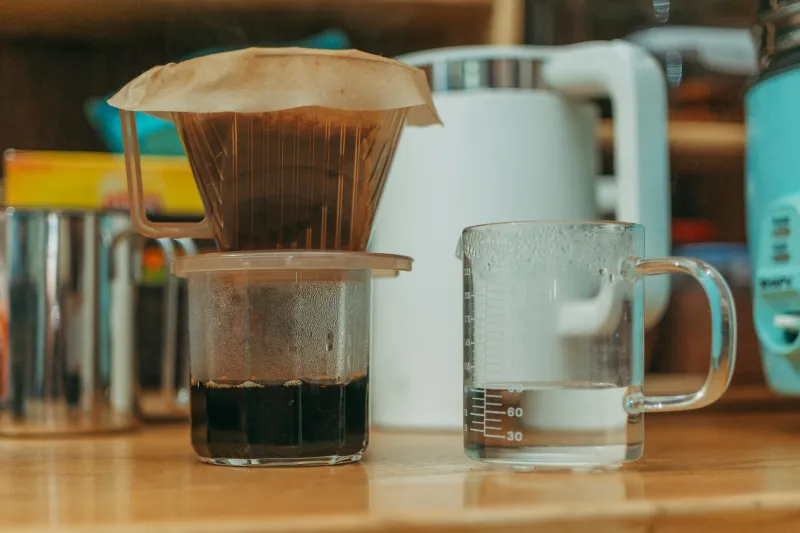
In 1972, a small Ohio company called North American Systems launched the Mr. Coffee automatic drip maker. Unlike earlier drip systems that required manual pouring, this machine automated the entire process. Add water, add grounds, flip a switch, and walk away.
The timing was perfect. Baseball legend Joe DiMaggio became the spokesperson, lending credibility to what some still saw as a newfangled gadget. More importantly, the machine arrived just as American coffee culture was becoming more sophisticated. The rise of specialty coffee shops and growing awareness of coffee quality made the precision of drip brewing suddenly appealing.
The Cultural Shift
Within a decade, automatic drip coffee makers went from novelty to necessity. By 1980, they were in 60% of American homes. By 1990, that number hit 80%. The percolator, once the undisputed king of American coffee, virtually disappeared from store shelves.
This wasn't just about better coffee—it was about changing lifestyles. The automatic drip maker fit perfectly into increasingly busy American mornings. Set it up the night before, wake up to fresh coffee. No watching, no timing, no burnt pots.
Why Timing Trumped Technology
Melitta Bentz's story reveals something crucial about innovation: having the best idea isn't enough. The drip coffee principle was sound in 1908, but American culture wasn't ready for it. It took suburban domesticity, scientific validation, and automated convenience to create the perfect adoption moment.
Today, as Americans debate the merits of pod machines, cold brew, and artisanal pour-overs, the humble automatic drip maker remains the most popular brewing method in the country. That's the power of an idea that finally found its moment—even if it took 60 years to get there.
The next time you hear that familiar morning gurgle, remember Melitta Bentz, the German housewife whose simple solution to bitter coffee eventually rewrote American breakfast routines. Sometimes the best inventions aren't the ones that change the world immediately—they're the ones that wait patiently for the world to catch up.