The Embarrassing Dinner That Accidentally Created America's Plastic Money Revolution
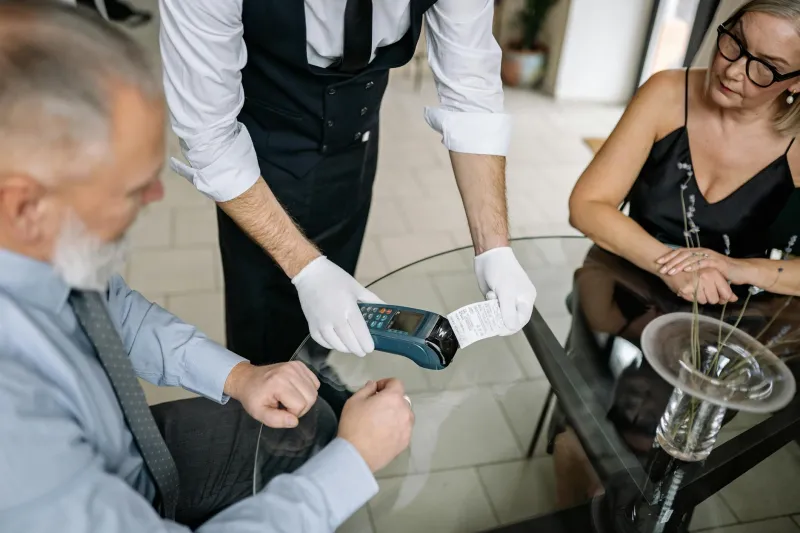
The Night Everything Changed
Picture this: It's February 1950, and you're at Major's Cabin Grill, one of Manhattan's finest restaurants. You've just finished an expensive dinner with your wife and business associates when the check arrives—and your stomach drops. Your wallet is sitting at home on the dresser.
This was Frank McNamara's nightmare scenario, and it actually happened. The successful businessman found himself in the humiliating position of having to call his wife to bring money while his dinner companions waited awkwardly at the table. For most people, this would just be an embarrassing story to laugh about later. For McNamara, it became the spark that would revolutionize American commerce.
From Humiliation to Innovation
McNamara wasn't just any businessman—he was a sharp-minded entrepreneur who ran a small loan company in New York. As he sat there waiting for his wife to rescue him from his financial embarrassment, his business brain started working. Why should anyone have to carry large amounts of cash to dine out? Why couldn't there be a way to pay for meals without cash, then settle up later?
The idea that formed in McNamara's mind that night was revolutionary for its time. In 1949, most Americans paid for everything with cash or checks. The concept of "charging" purchases existed mainly in department stores, where wealthy customers had store accounts. But a universal payment method that worked across different businesses? That was uncharted territory.
The Birth of Diners Club
Within months of his restaurant humiliation, McNamara had partnered with his lawyer Ralph Schneider and friend Al Bloomingdale to create something unprecedented: a payment card that would work at multiple restaurants. They called it Diners Club, and it launched in February 1950—exactly one year after McNamara's embarrassing dinner.
The first Diners Club card was made of cardboard, not plastic. It was more like a membership card than what we'd recognize as a credit card today. The initial network included just 27 restaurants in New York City, and the company charged cardholders a $3 annual fee plus a 7% fee to participating restaurants.
The Psychology of Plastic
What McNamara and his partners had stumbled onto was something much bigger than convenient restaurant payments. They'd discovered that people would spend more money when they didn't have to physically hand over cash. This psychological phenomenon, now well-documented by behavioral economists, was completely accidental.
The early Diners Club marketing played directly into American social anxieties. Their advertisements didn't focus on convenience—they focused on status and the fear of embarrassment. "Don't be embarrassed by fumbling for cash," read one early ad. They'd turned McNamara's personal humiliation into a marketing strategy.
Growing Pains and Growing Networks
The first year was rocky. Many restaurants were skeptical about giving up 7% of their revenue to a payment company. Customers weren't sure they trusted this new system. But McNamara had learned something crucial from his own experience: the fear of social embarrassment was a powerful motivator.
By the end of 1950, Diners Club had 42,000 cardholders and was accepted at more than 330 establishments. The company had figured out the secret formula: sign up prestigious restaurants and hotels, then market the card as a status symbol to business travelers and wealthy urbanites who wanted to avoid the embarrassment of counting out bills.
The Ripple Effect Across America
What started as a solution to one man's restaurant embarrassment quickly expanded beyond dining. Hotels, car rental companies, and airlines began accepting Diners Club cards. By 1955, the company had expanded internationally, and other companies were rushing to create their own versions.
Bank of America launched BankAmericard (later Visa) in 1958. American Express entered the market in 1958 with their own charge card. MasterCard emerged in 1966. Each new player refined the concept, but they all traced back to that awkward night at Major's Cabin Grill.
How One Dinner Changed Everything
Today, Americans carry an average of four credit cards each, and credit card transactions account for more than $4 trillion in annual spending. The entire structure of American retail, from online shopping to subscription services, depends on the payment infrastructure that McNamara accidentally invented.
The irony is perfect: a financial product born from the embarrassment of not having money became the foundation of an economy built on debt. McNamara's solution to avoid carrying cash created a system where millions of Americans rarely carry cash at all.
The Legacy of an Awkward Moment
Frank McNamara sold his stake in Diners Club in 1952, just two years after founding it, reportedly because he was worried about Americans going into too much debt. He couldn't have imagined that his solution to one embarrassing dinner would evolve into an industry worth hundreds of billions of dollars.
Every time you tap your card at a coffee shop or enter your credit card number online, you're participating in a system that began with one man's mortifying realization that he'd forgotten his wallet. Sometimes the most transformative innovations come not from grand visions of the future, but from simple human moments of embarrassment and the determination to never let them happen again.
The next time you're fumbling for your wallet, remember Frank McNamara—the man whose most embarrassing dinner accidentally created the plastic money revolution that defines American commerce today.