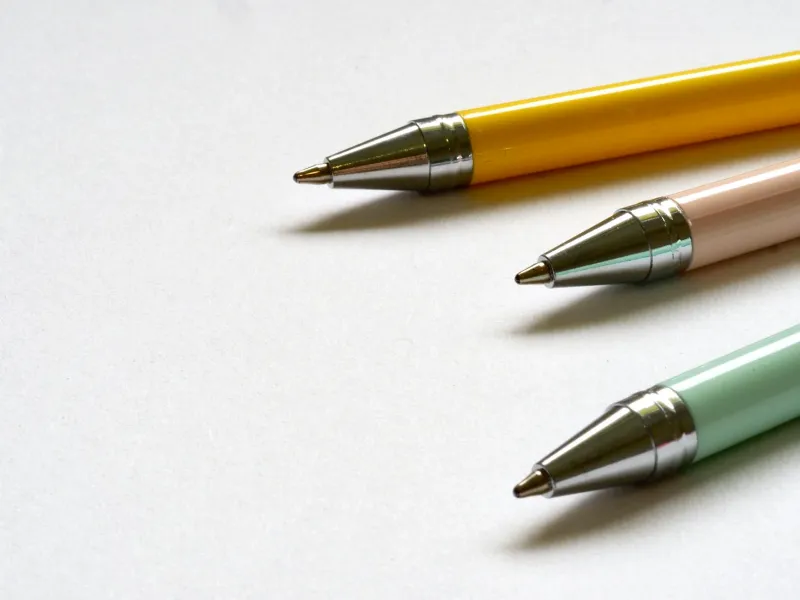
The Pen the Pentagon Didn't Want
In 1943, while American GIs were fighting their way across Europe with fountain pens that leaked ink all over their field reports, the U.S. War Department had a chance to solve their writing problems forever. A Hungarian journalist named László Bíró had invented something called a "ballpoint pen" — a writing instrument that used thick, quick-drying ink and a tiny metal ball instead of a traditional nib.
 Photo: László Bíró, via i.ytimg.com
The Army tested it. And promptly rejected it as "unreliable military equipment."
That rejection would accidentally set in motion the most unlikely writing revolution in American history.
When Fountain Pens Ruled the World
To understand how radical the ballpoint was, you have to picture 1940s America. Every serious writer, businessman, and student carried a fountain pen. These weren't just writing tools — they were status symbols. A good fountain pen cost the equivalent of $200 in today's money, required careful maintenance, and demanded respect.
Schools taught "penmanship" with fountain pens because educators believed the controlled flow of ink taught discipline and proper letter formation. Using anything else was considered cheating — literally training your hand with an inferior tool.
Bíró's ballpoint seemed like a gimmick. The ink was too thick, the ball mechanism was clunky, and early versions skipped and smeared. When the War Department's procurement officers tested sample pens in 1943, they concluded the technology wasn't ready for serious use.
They were probably right.
The Publicity Stunt That Changed Everything
But in October 1945, an American entrepreneur named Milton Reynolds saw something the military missed. Reynolds had spotted Bíró's pens in Argentina and realized that while they weren't perfect, they didn't leak at high altitudes the way fountain pens did.
 Photo: Milton Reynolds, via images.findagrave.com
Reynolds reverse-engineered the design, rushed his own version into production, and pulled off one of the most audacious marketing stunts in retail history. On October 29, 1945, Gimbels department store in New York City began selling "Reynolds Rocket" ballpoint pens for $12.50 each — about $200 today.
The marketing pitch was pure genius: "The pen that writes under water!" "No refilling ever!" "The atomic pen!"
New Yorkers went absolutely crazy. Gimbels sold 10,000 pens on the first day. People waited in lines that stretched around the block. Police had to be called to manage the crowds.
Reynolds became a millionaire overnight. But he'd also accidentally triggered a disaster.
The Great Ballpoint Crash
Within months, dozens of American companies were cranking out cheap ballpoint knockoffs. Quality plummeted. Prices collapsed from $12.50 to 50 cents to 19 cents. By 1948, you could buy a ballpoint pen for a nickel.
The pens were terrible. They leaked, skipped, and broke constantly. Americans felt swindled. Department stores stopped carrying them. The ballpoint pen looked like a failed fad.
But something strange was happening in the background. Even though the pens were cheap junk, people kept buying them. Factory workers liked that they didn't stain their work clothes. Busy mothers appreciated that they didn't require careful handling. Kids discovered they could write on almost any surface.
The Classroom Revolution Nobody Planned
The real breakthrough came in classrooms. Throughout the 1940s, teachers had banned ballpoints as "training wheels" that would ruin students' handwriting. But by the early 1950s, some progressive educators began questioning whether penmanship mattered as much as actually getting thoughts on paper.
Ballpoints were faster. They required less pressure. Students with coordination issues could write more easily. As quality gradually improved through the 1950s — thanks to companies like Bic perfecting the ink formula — the educational establishment slowly capitulated.
By 1960, most American schools allowed ballpoint pens. By 1970, they were standard.
The Invisible Infrastructure of Modern Writing
Today, Americans buy about 2 billion ballpoint pens every year. We've internalized the ballpoint's characteristics so completely that we barely notice them. We expect pens to work instantly, write on any surface, and cost almost nothing.
The fountain pen's careful ritual — uncapping, checking ink levels, cleaning the nib — has vanished from daily life. We grab ballpoints without thinking, click them absent-mindedly during meetings, and throw them away when they run dry.
From Military Reject to Cultural Default
What makes this story fascinating isn't just that the ballpoint pen succeeded despite initial rejection — it's how completely it rewired American expectations about writing itself. The War Department was probably right to reject early ballpoints as unreliable. Teachers were probably right to worry about penmanship standards.
But they missed something crucial: Americans didn't want perfect pens. They wanted convenient pens.
The ballpoint's journey from rejected military equipment to ubiquitous writing tool reveals something profound about how technologies actually spread. It's rarely about superior engineering or official endorsement. Sometimes it's about a publicity stunt, a race to the bottom on price, and millions of small daily conveniences that add up to a revolution nobody planned.
Every time you click a pen without thinking, you're participating in an accident of history that started with a Hungarian journalist, survived a military rejection, and somehow became the signature of modern American life.