Ahoy vs. Hello: The Telephone Battle That Shaped How Americans Greet Each Other
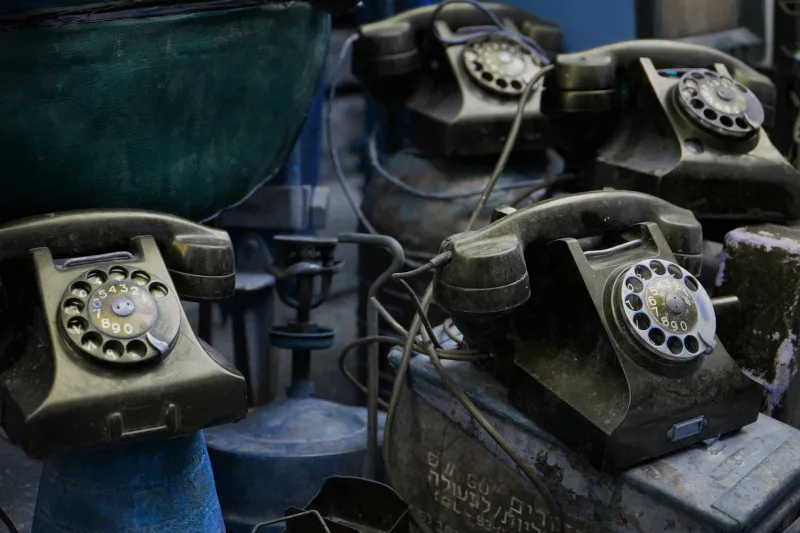
Ahoy vs. Hello: The Telephone Battle That Shaped How Americans Greet Each Other
Pick up your phone, answer a call from a number you don't recognize, and there's a decent chance the first word out of your mouth is "hello." You probably didn't decide to say it. You didn't weigh your options. It just came out, the way it always does, the way it's always done.
That automatic response is the result of a specific decision made in the late 1870s by a man who wasn't even the one who invented the telephone. And the word he beat out — the one that could have become the standard American greeting instead — was "ahoy."
A Word That Barely Existed
To understand how significant this is, you have to appreciate how marginal the word "hello" was before the telephone arrived.
The word's documented history is surprisingly short. It appears in print in the United States in the 1820s and 1830s, mostly as a variation of older exclamations — "holla," "hollo," "hullo" — used to hail ferrymen across rivers or to get someone's attention at a distance. It was the kind of thing you shouted across a field or a waterway. It wasn't a greeting between people who were face to face. It wasn't polite. It wasn't formal. In the context of 19th century American social norms, it was closer to a shout than a salutation.
Mark Twain, who was paying attention to American language the way most people pay attention to weather, noted that "hello" was something you said when you were surprised or when you needed to get someone's attention urgently. That was about the extent of its social role.
Bell's Preferred Opening
When Alexander Graham Bell invented the telephone in 1876, he needed to figure out something that hadn't existed before: a standard way to open a two-way voice communication with someone you couldn't see. There was no established protocol, because there had never been a device like this.
Bell's instinct was "ahoy" — a word with nautical roots, used by sailors to hail other ships. It's a clean, projecting sound, easy to hear over noise, and Bell apparently liked its clarity. He used it himself and advocated for it as the telephone's standard opening.
If Bell had gotten his way, answering the phone in America might have started with a word that now sounds like something a cartoon pirate says. The alternate timeline is genuinely hard to picture.
Edison Picks a Winner
Thomas Edison had a different opinion. In a letter written in 1877 to the president of the Central District and Printing Telegraph Company in Pittsburgh, Edison suggested that the word to use when answering the telephone should be "hello." His reasoning was practical: it was short, it was loud, it projected well, and it was unambiguous. Edison wasn't interested in nautical charm. He was interested in what worked.
Edison was, at this point, one of the most influential figures in American technology, and his recommendations carried real weight. As telephone exchanges began to open across the country — the first one launched in New Haven, Connecticut in 1878 — operators needed a standard protocol. Edison's suggested word was included in some of the earliest telephone operating manuals as the recommended way to open a call.
The choice wasn't made by a government body or a standards committee. It was made informally, through the accumulated weight of early telephone infrastructure decisions, with Edison's voice carrying more than most. Bell continued to prefer "ahoy" for years, but the exchanges weren't following his lead.
How a Device Embedded a Word Into a Culture
What happened next is a textbook case of how technology shapes language, rather than the other way around.
As telephone networks expanded through the 1880s and 1890s, "hello" became the standard opener on calls across the country. Telephone operators — overwhelmingly young women in the early years of the industry — were trained to answer with "hello." Callers heard it constantly. They repeated it. It became the expected signal that a connection had been made and communication could begin.
The sheer volume of telephone interactions meant that "hello" was being used in a new social context millions of times a day. And because the telephone was novel and modern and aspirational, the habits associated with it carried a certain cultural prestige. People began using "hello" as a face-to-face greeting as well, importing the telephone convention into everyday speech.
By the turn of the 20th century, "hello" had completed a remarkable transformation. It had gone from a rough exclamation with almost no social standing to the default greeting in American English — used in person, in letters, in casual conversation, and eventually, in the title of one of the best-selling pop songs ever recorded.
The Word That Won
Language historians point to the telephone as one of the most powerful standardizing forces in American English. Regional dialects persisted, but certain words and phrases — especially those tied to technology — spread uniformly in ways that geographic and cultural variation would normally have prevented.
"Hello" is the clearest example. Without the telephone, it's genuinely unclear whether the word survives into modern usage at all, let alone becomes the near-universal greeting it is today. It might have remained a rough interjection, used occasionally and considered slightly low-class.
Instead, it's the word Americans say more often than almost any other. It opens conversations, emails, speeches, and songs. It's the first thing a toddler learns to say into a phone. It's the word Adele chose as the title of a song that broke streaming records in 2015.
All of that traces back to a practical suggestion from Thomas Edison in 1877, a word that was barely legitimate, and a device that needed a way to say: I'm here. Are you there?
The answer, it turned out, was hello.