62 Days of Mud and Broken Axles: The Army Convoy That Invented the American Road Trip
62 Days of Mud and Broken Axles: The Army Convoy That Invented the American Road Trip
Every summer, millions of Americans load up a car and hit the open road. It's one of the country's most enduring rituals — the road trip. Wind down the windows, pick a direction, and drive. The freedom of it feels almost constitutional, like it's always been there.
It hasn't. And the moment it was born doesn't look anything like a vacation.
America's Roads Were a Disaster
In 1919, the United States did not have a highway system in any meaningful sense of the phrase. What it had was a patchwork of local roads — some paved, most not — that varied wildly in quality from county to county and state to state. There was no national standard. There was no coordination. In many parts of the country, the roads that existed were barely passable in dry weather and genuinely dangerous in wet conditions.
The Army had just come through World War I with a new and urgent appreciation for logistics. Moving men and equipment across Europe had required roads, and the U.S. military came home asking an uncomfortable question: if we ever had to mobilize forces across our own country, could we actually do it?
The answer, they suspected, was no.
The Convoy Sets Out
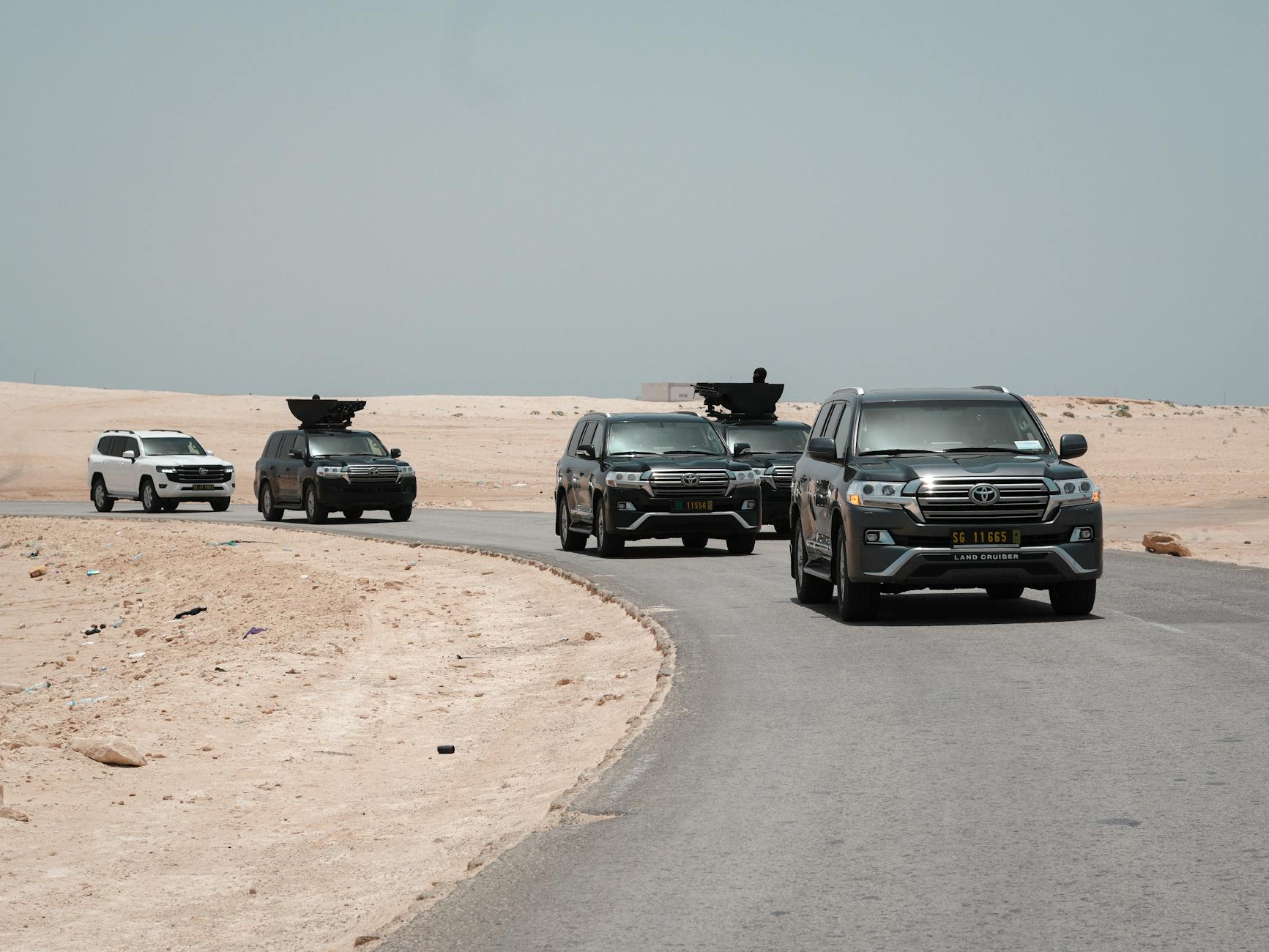
On July 7, 1919, a convoy of 81 Army vehicles departed the Ellipse in Washington, D.C., bound for San Francisco. The mission was officially called the Army Motor Transport Corps Transcontinental Motor Convoy, and it was as much a publicity exercise as a military test — the Army wanted to demonstrate the importance of good roads to the American public and to Congress.
The convoy included trucks, ambulances, field kitchens, motorcycles, and a handful of observation cars. It carried nearly 300 soldiers and officers. Among them, almost as an afterthought, was a 28-year-old lieutenant colonel named Dwight D. Eisenhower, who had missed combat deployment in WWI and signed on to the convoy largely out of curiosity and boredom.
What followed was 62 days of organized misery.
The Road Fought Back
The convoy averaged fewer than six miles per hour across the entire journey. Roads turned to mud in the rain and to dust clouds in the heat. Bridges collapsed under the weight of military vehicles — the convoy broke or damaged 88 bridges along the route. Trucks got stuck in sand traps in the Nevada desert. Vehicles broke down constantly; the convoy's repair crews logged over 200 mechanical incidents before they reached California.
In Nebraska, the convoy sank into roads that were essentially glorified dirt paths. In Utah, they crossed salt flats that looked solid and weren't. In the Sierra Nevada, the mountain grades were so steep that vehicles had to be winched up sections of road by hand.
Eisenhower wrote about the experience in his memoirs decades later, describing roads that were 'average 'dirt' roads, improved to the extent that they were hard enough to be impassable in wet weather.' He remembered it as an adventure, but also as a revelation. The United States, the world's emerging industrial superpower, could not reliably move its own military across its own territory.
The convoy arrived in San Francisco on September 6, 1919. It had covered 3,251 miles. The celebration at the finish was genuine — but so was the report filed afterward, which documented the journey's failures in exhaustive detail and made a direct case for federal investment in roads.
The Idea That Waited 35 Years
The convoy's report went into files. Congress noted it. Some road improvements followed. But the scale of change required was enormous, the political will was limited, and the country moved on.
Eisenhower moved on too — through a military career that would eventually take him to Supreme Allied Commander in Europe during World War II, where he watched the German Autobahn system in action and understood immediately what the United States was missing. The Germans had built a national highway network that allowed rapid, large-scale movement of people and equipment. The Americans still hadn't.
In 1953, Eisenhower became the 34th President of the United States. In 1956, he signed the Federal Aid Highway Act, authorizing the construction of 41,000 miles of interstate highway — the largest public works project in American history at that point. He later said that his memories of the 1919 convoy were among the direct inspirations for the legislation.
The kid who'd spent 62 days watching Army trucks sink into Nebraska mud had built the highway system.
The Road Trip Was a Side Effect
Here's the part of the story that rarely gets told: the Interstate Highway System was designed for military logistics. Eisenhower wanted highways wide enough for military vehicles, strong enough for heavy equipment, and routed to connect major population centers and military installations. The famous requirement that one mile in every five must be straight enough to serve as an emergency airstrip is probably apocryphal — but it captures the military logic that drove the whole project.
What nobody fully anticipated was what ordinary Americans would do with it.
By the 1960s, the interstates had made long-distance driving genuinely practical for the first time. Gas stations, motels, and diners followed the highways. Car culture exploded. Families started loading into station wagons and driving to national parks, to relatives across state lines, to places they'd never been able to reach before. The road trip — as a recreational tradition, as a cultural identity, as an expression of American freedom — emerged almost as an accident from a military infrastructure project.
The Long Road Back
The next time you merge onto an interstate with a cooler in the back seat and a playlist ready to go, you're participating in something that traces back to a grueling military exercise most Americans have never heard of.
A convoy that broke 88 bridges. A young officer taking notes in the mud. A president who remembered what bad roads felt like. And a highway system built for war that accidentally gave the country one of its most beloved peacetime traditions.
The American road trip didn't come from freedom or wanderlust or some natural national instinct. It came from 62 days of broken axles in 1919 — and the man who never forgot them.